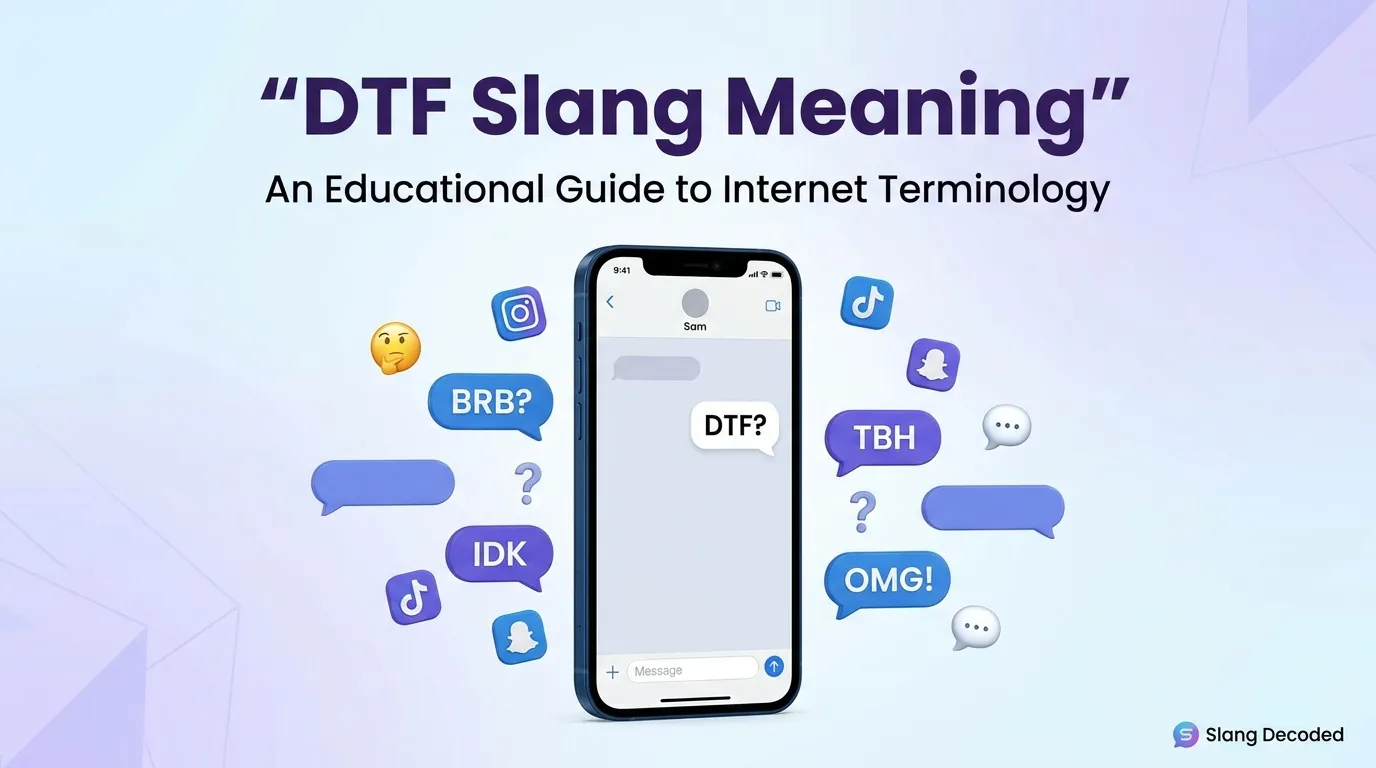
If you saw the term DTF slang somewhere online and felt confused, you are not alone.
DTF is a short slang term made from the first letters of a phrase. It’s mostly used in texting, dating apps, and social media.
In simple terms, DTF means someone is willing or open to something in a casual, no-strings-attached way most often used in a flirty or dating context.
In this article, you’ll learn exactly what DTF means, where it came from, how it’s used today, and mistakes people make with it.
This guide keeps things simple and clear. You’ll get real examples, a quick table for fast answers, and tips so you never feel lost again when you see this term pop up in a chat or on social media.
Quick Answer
DTF stands for Down To F, a slang phrase used mostly in texting and dating apps. It means a person is open to something casual, often related to dating or hooking up, without wanting a serious relationship. It’s informal slang, not something you’d use in school papers, job interviews, or professional emails.
| Term | Meaning | Where It’s Used |
| DTF | Down To F (open to something casual) | Texting, dating apps, social media |
| DTR | Define The Relationship | Dating conversations |
| Netflix and chill | Code for a casual hangout/hookup | Texting, social media |
| Ghosting | Suddenly stopping contact with no explanation | Dating apps, texting |
Meaning or Definition
DTF is an acronym, which means each letter stands for a word. The letters stand for Down To F. The word after Down To is a strong slang word, so many websites and apps just show it as DTF instead of spelling it out.
At its core, DTF is used to say someone is willing to do something casual and often physical, without expecting commitment. It shows up a lot on dating apps like Tinder or Bumble, in group chats between friends, and in comments on social media posts. It’s almost always informal and casual in tone, even though the topic behind it can be serious.
It’s worth knowing that DTF isn’t only about romance or hookups anymore. Some people now use it in a joking way to mean they’re simply down or willing to do anything fun, like DTF for tacos or DTF for a road trip. This playful use has grown a lot in recent years, especially among younger people online.
DTF Meaning
The DTF meaning is “Down to F*,”** a slang phrase used to ask or indicate that someone is interested in having a sexual encounter. It is commonly seen in text messages, dating apps, and social media conversations. Because the phrase has an adult meaning, it is only appropriate in informal conversations between consenting adults. Understanding DTF helps you recognize what someone means when this abbreviation appears in an online chat or message.
DTF Meaning in Text
If you see DTF in a text message, it usually means “Down to F*.”** People use this abbreviation to ask if someone is interested in a sexual relationship or casual hookup. It is most common on dating platforms, private messages, and social media chats. Since DTF is adult slang, the meaning depends on the conversation and should only be used in appropriate situations between adults who clearly understand the context.
DTF Meaning in Chat
The DTF meaning in chat is the same as in texting. It stands for “Down to F*”** and is used during informal online conversations. You may come across this slang on dating apps, Snapchat, Instagram, or other messaging platforms. Because it refers to adult sexual interest, it is not suitable for professional or family-friendly conversations. Knowing the meaning helps you understand the intent behind the message before deciding how to respond.
What Does DTF Mean in Slang?
If you search what does DTF mean in slang or DTF slang, the abbreviation means “Down to F*.”** It is a widely recognized internet slang term that expresses interest in casual sexual activity. The phrase became popular through online dating culture and is now commonly used in digital conversations. Since DTF has an explicit adult meaning, it should only be used in appropriate contexts and between adults who are comfortable with that language.
DTF Full Form in Chat
The DTF full form in chat is “Down to F*.”** This abbreviation allows people to express the phrase using just three letters while texting. It is most often found in dating apps, online chats, and social media messages. Because the term has a sexual meaning, it is considered adult slang rather than everyday internet shorthand. Understanding the full form helps you interpret online conversations more accurately and avoid confusion
DTF Meaning in Text Chat and Full Form
DTF is a popular internet slang term that stands for “Down To F*.”** It is commonly used in text messages chat apps and social media to ask or suggest that someone is interested in a casual sexual encounter. Because the phrase is explicit many people avoid using it in professional or family conversations. On platforms like WhatsApp Snapchat and Instagram the meaning usually stays the same so understanding the context is important before responding.
DTF Slang Meaning and Origin
The slang term DTF became widely known through early internet culture online forums and dating apps before spreading across social media. It gained even more popularity after being featured in television shows and pop culture. Today younger users may still use DTF in casual conversations memes and online jokes. Although the abbreviation is easy to recognize it should always be interpreted based on the conversation because its direct meaning makes it suitable only for informal settings.
DTF Slang Meaning on Instagram
On Instagram the abbreviation DTF usually carries the same meaning as it does on other social platforms. It may appear in captions comments direct messages or memes where users are joking flirting or discussing dating. Since Instagram includes people of different ages and backgrounds the term can sometimes be used humorously instead of literally. Reading the full conversation helps you understand whether it is meant seriously or simply as internet slang.
Origin or History
Slang like DTF usually grows out of everyday texting habits, where people shorten long phrases to save time and typing space. It became widely known and searched online in the early 2010s, growing fast alongside the rise of texting culture and later, dating apps.
As dating apps became more common, casual slang terms spread quickly because people needed fast, informal ways to communicate interest or intentions. DTF became one of those terms that stuck, similar to how LOL or BRB became common shorthand for other ideas. There is no single person or event credited with creating it it grew naturally from internet and texting culture.
Grammar or Correct Usage
DTF is almost always written in capital letters, since it’s an acronym. It doesn’t change form for tense, plural, or grammar rules like a regular word would. Here’s how it typically appears in a sentence:
- Are you DTF this weekend?
- She said she’s not DTF right now.
- He’s always DTF for adventure, even hiking at 6 a.m.
Notice that DTF works like an adjective in these sentences. It describes a person’s willingness or mood, not an action by itself. You wouldn’t say I DTF you, because that breaks the natural grammar pattern people use with this slang.
It’s also almost never used in formal writing. You won’t see DTF in a business email, a school essay, or a news article’s main text, unless the article is specifically explaining slang, like this one.
Common Mistakes
Many people misunderstand or misuse DTF because it looks harmless at first glance. Here are common mix-ups worth knowing about.
| Mistake | Why It’s Wrong | Correct Understanding |
| Thinking DTF always means dating | It can also mean casual willingness for non-romantic things | Context matters a lot |
| Using DTF in professional messages | It’s very informal slang | Keep it to casual texting only |
| Assuming everyone knows the term | Many people, especially older generations, don’t recognize it | Explain if unsure of your audience |
| Believing it’s always serious | It’s often used jokingly among friends | Tone and context decide the meaning |
One of the biggest mistakes is assuming DTF always signals something serious or romantic. In reality, tone and context change everything. Reading the full conversation matters more than just spotting the letters DTF.
Real-Life Examples
Seeing DTF used in real conversations helps make the meaning clearer. Here are a few everyday examples showing different tones and situations.
A friend texting about weekend plans might write: There’s a bonfire Saturday, you DTF? Here, it’s simply asking if someone is willing to come along and join in the fun.
On a dating app, someone might message: Not looking for anything serious, just DTF. In this case, it clearly signals they want something casual, without commitment.
Among close friends joking around, someone might say: I’m DTF for pizza at midnight, no judgment. This playful use shows how far the phrase has traveled from its original meaning, becoming a lighthearted way to say I’m totally up for it.
Current Usage or Trends
DTF slang is still widely used today, especially on dating apps and in casual texting between younger adults and teens. Social media platforms like TikTok, Instagram, and Twitter/X have also helped spread and reshape its meaning through memes and jokes.
Interestingly, Gen Z has taken older slang terms like DTF and given them new, less serious spins. Instead of only signaling romantic or physical interest, it’s now often used humorously to describe general enthusiasm or willingness, similar to saying I’m in or count me in.
This shift shows how slang naturally evolves over time. Words and phrases rarely stay locked into just one meaning, especially online, where trends move fast and creativity around language never really stops.
Tips or Best Practices
If you’re unsure whether to use DTF or how to respond to it, a few simple guidelines can help you navigate the situation with confidence.
First, always think about your audience before using slang like DTF. It fits casual texting between friends or dating app chats, but it doesn’t belong in formal writing, school assignments, or workplace messages.
Second, pay attention to context clues in a conversation. If someone uses DTF playfully about food or activities, responding seriously about dating could come across as confusing or awkward.
Third, if you’re ever uncertain about someone’s intended meaning, it’s completely fine to ask directly. A simple what do you mean by that? clears up confusion quickly and avoids misunderstandings, especially in dating conversations where clarity really matters.
Finally, remember that not everyone knows or uses this slang. Older adults, people from different countries, or those less active on social media might not recognize DTF at all, so a little extra explanation never hurts.
FAQs
What does DTF mean in texting?
DTF means Down To F, a slang term showing someone is open to something casual, often related to dating or hooking up, though it’s sometimes used jokingly for other activities too.
Is DTF always about dating? Not always. While it started as dating and hookup slang, many people now use it jokingly to mean they’re simply willing or excited about non-romantic things, like food or weekend plans.
Is it okay to use DTF at work or school?
No, DTF is very informal slang and isn’t appropriate for professional emails, school papers, or formal conversations of any kind.
Where did DTF slang come from?
DTF grew from texting culture and became widely recognized in the early 2010s, spreading quickly alongside dating apps and casual online communication.
How do I respond if someone texts me DTF?
It depends on your comfort level and the relationship. If you’re unsure of someone’s intent, it’s completely fine to ask them directly what they mean before responding.
Does everyone understand what DTF means?
No, plenty of people, especially older generations or those less active online, may not recognize this slang term at all, so context or explanation often helps.
Conclusion
DTF slang stands for Down To F, a casual term mostly used in texting, dating apps, and social media to show someone’s willingness toward something, often related to dating or hooking up. Over time, its meaning has stretched beyond just romance, now sometimes used playfully to express general enthusiasm about everyday plans.
Understanding DTF slang helps you read conversations more accurately and avoid confusion, especially while texting or chatting on dating apps. Always consider context, tone, and audience before using or responding to it. When in doubt, asking for clarification is always a smart, simple move that keeps communication clear and comfortable for everyone involved.
Discover More Articles
- IYKYK Mean? Everything You Need to Know
- OFC Mean? Complete Guide
- What Does TH Mean? Full Meaning Explained
- What Is OFC Mean? Simple Guide With Real Examples