Many people search for ikigai meaning because they hear the word but do not know what it means.
It sounds pretty. It sounds deep. But most people cannot explain it in one sentence. This word comes from Japan, and it talks about your reason for living.
In this article, we will explain the ikigai meaning in plain words. We will also show how English speakers spell it, say it, and use it in real life.
By the end, you will understand this word better than most people who use it daily.
Quick Answer
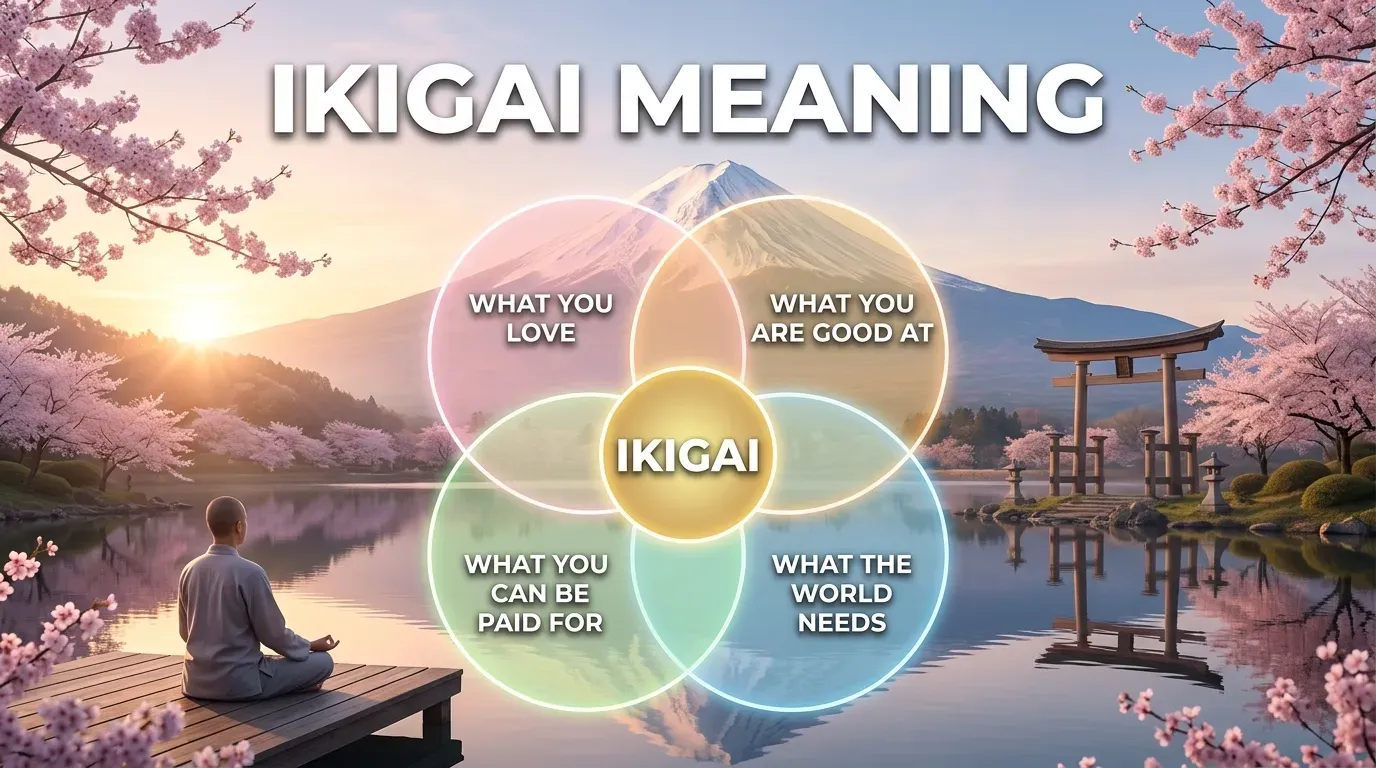
Ikigai means a reason for being. It comes from two Japanese words. Iki means life. Gai means value or worth. Put together, ikigai means the thing that makes your life feel worth living. It is not just a job. It is not just a hobby. It is the mix of what you love, what you are good at, and what gives you purpose. The word is a noun. It stays the same in both British and American English. There is no separate spelling for each region.
Origin
The word ikigai is old. People in Okinawa, Japan, used it long before it became popular around the world. Okinawa is known for having many people who live past one hundred years. Researchers studied why. They found that having a strong ikigai was one reason. It gave people a daily purpose. It kept their minds active and their hearts happy.
The word entered English slowly. Writers and researchers began using it in books about happiness and long life. By 2026, it appears often in wellness blogs, workplace training, and even school programs. Companies now teach ikigai as a tool for finding better work-life balance. Schools use it to help students pick future careers. The idea spread because it feels simple, yet it touches something deep in every person.
British vs American English
The word ikigai does not change between British and American English. It is a loanword, which means English borrowed it directly from Japanese. Loanwords often skip the usual spelling changes we see with other English words. Still, people in both regions pronounce it slightly differently, and some writers format it differently in text. Here is a simple table to show this.
| Feature | British English | American English |
| Spelling | Ikigai | Ikigai |
| Pronunciation | ee-kee-guy | ick-ee-guy |
| Common Usage | Often used in wellness and psychology writing | Often used in business and self-help writing |
| Capitalization Style | Lowercase in most sentences | Lowercase in most sentences |
| Example Phrase | She found her ikigai in teaching. | He built his career around his ikigai. |
As the table shows, the spelling never changes. Only the sound and the writing style shift a little. British writers tend to use it in calmer, reflective writing. American writers often connect it to goals and career advice.
Which Should You Use?
Since the spelling stays the same everywhere, you do not need to worry about choosing a British or American version. Instead, focus on your audience. If you write for a business crowd, use ikigai with career-focused examples. If you write for a wellness or mindfulness audience, use it with life-purpose examples. Always keep the word lowercase, unless it starts a sentence or appears in a title.
If your audience is new to the word, add a short meaning next to it the first time you use it. For example, write ikigai, or your reason for being. This helps readers who are seeing the word for the first time in 2026, since it is still growing in popularity worldwide.
Common Mistakes
Many people misspell or misuse this word. Here are common errors, shown side by side with the correct form.
Wrong: ikagai Correct: ikigai. The middle letters often get swapped by mistake.
Wrong: Iki-gai with a hyphen Correct: ikigai as one word. English writing does not use a hyphen here.
Wrong: Ikigai is just your job. Correct: Ikigai is more than your job. It includes passion, mission, and purpose too.
Wrong: IKIGAI in all caps for normal writing Correct: lowercase ikigai, unless used in a headline or logo.
Wrong: an ikigai Correct: usually written without an, since it is treated more like a concept than a countable object, as in she has ikigai or she found her ikigai.
These small errors are easy to fix once you know them. Most mistakes come from unfamiliarity, not carelessness.
Everyday Examples
Seeing the word in real situations helps you understand it faster. Below are four examples from daily life.
Email example: Hi Sarah, I wanted to share this idea with you. I think exploring your ikigai could help with your career change this year.
Headline example: Five Simple Steps to Discover Your Ikigai in 2026
Social post example: Found my ikigai today while volunteering at the shelter. Feels like everything finally makes sense. #ikigai #purpose
Formal sentence example: The workshop encouraged employees to reflect on their ikigai as part of the new wellness program.
These examples show the word fits many settings. It works in casual posts and formal writing alike.
Trends and Usage Data
Interest in ikigai has grown steadily worldwide. Wellness programs, business coaching, and even school career guides now mention it often. In 2026, searches for the word spike mostly around January, when people set new goals, and again in September, when new school terms begin.
The word appears most in writing from Japan, the United States, the United Kingdom, and Australia. Business and self-help content dominate in the United States. Mindfulness and mental health content leads in the United Kingdom. Japan continues to use it in its traditional, cultural sense, tied closely to community and daily habits, rather than career planning alone.
| Region | Common Usage Context | Popularity Level (2026) |
| Japan | Traditional life purpose, daily habits | High |
| United States | Career coaching, self-help books | Very High |
| United Kingdom | Mental health, mindfulness writing | High |
| Australia | Workplace wellness programs | Moderate |
| India | Motivational speaking, youth guidance | Growing |
This table shows how one word can mean slightly different things depending on where it is used. The core meaning stays the same everywhere, though.
FAQs
What does ikigai mean in English?
It means a reason for being. It describes the thing that gives your life purpose and joy.
How do you pronounce ikigai?
Most people say ick-ee-guy or ee-kee-guy. Both are accepted, since pronunciation varies slightly by region.
Is ikigai a real Japanese word?
Yes, it is a real word used in Japan for many years, especially in Okinawa, before spreading worldwide.
Can ikigai be a job?
It can include a job, but it is bigger than that. It also includes passion, skill, and personal meaning.
Is ikigai the same as passion?
No. Passion is only one part of ikigai. Ikigai also includes what you are good at and what the world needs.
Do British and American English spell ikigai differently?
No. Both spell it the same way. Only pronunciation and writing style differ slightly between the two.
Conclusion
The ikigai meaning is simple once you break it down. It stands for your reason for living, built from passion, skill, purpose, and value. The spelling never changes between British and American English, though usage style can differ slightly.
Avoid common mistakes like extra hyphens or wrong letter order. Use real examples to help readers understand the word faster. As more people search for balance and purpose in 2026, this word will likely keep growing in daily use. Understanding it clearly puts you ahead of most casual readers online today.
Discover More Post
- What Does Ineffable Mean in English? Full Meaning Guide
- What Is Sonder Meaning? Real Definition & Examples
- Limerence Meaning Explained Simply (Full Guide)

As Mark Twain once said, “The human race has only one really effective weapon, and that is laughter.” At Goffaws.com, we couldn’t agree more—especially when it comes to CrossFit puns and jokes. Fitness may be about strength and endurance, but a good laugh can be the best workout of all. From playful gym humor to clever word twists that would make Twain chuckle, we’re here to prove that comedy and conditioning are the perfect pair.