If you have ever texted a friend or scrolled through social media, you have probably seen the letters BTW pop up somewhere.
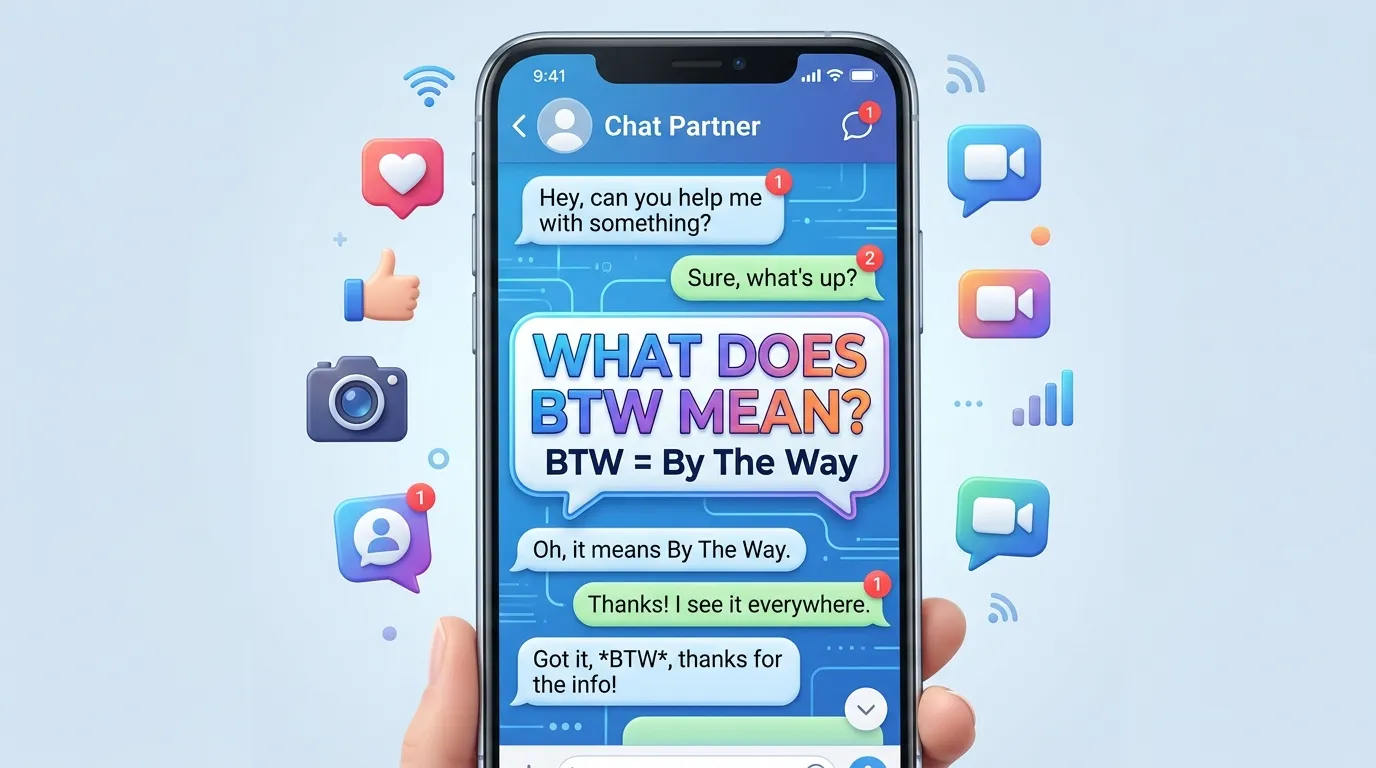
So, what does BTW mean? BTW is a short way of writing by the way.
People use it to add extra information to a conversation without making a big deal out of it. It is one of the most common abbreviations used in texting, chatting, and even casual emails today.
In this article, you will learn exactly what BTW means, how to use it correctly, where it came from, and how it fits into everyday conversations.
By the end, you will feel confident using BTW the right way.
Quick Answer
BTW stands for by the way. People use it when they want to mention something extra or change the topic slightly during a conversation. It is casual, friendly, and works best in text messages, chats, and informal writing. You would not usually use BTW in a formal letter or a school essay, but it fits perfectly in everyday digital conversations.
Meaning or Definition
BTW is an abbreviation, which means it is a short form of a longer phrase. The full phrase is by the way. People use by the way to introduce a new idea, add a small detail, or switch topics without disrupting the flow of a conversation.
For example, if you are chatting with a friend about weekend plans, you might suddenly remember something else you wanted to tell them. Instead of stopping the conversation completely, you can say, BTW, did you see the new movie trailer? This lets you smoothly bring up something new.
BTW is considered an initialism, not an acronym. That might sound confusing, so here is the difference. An acronym is pronounced as a word, like NASA. An initialism is said letter by letter, like BTW, which people say as B-T-W, not as one word.
Grammar or Correct Usage
BTW is very flexible and can be used in different parts of a sentence. Here are some simple usage rules to keep in mind.
You can start a sentence with BTW. This is the most common way people use it. For example: BTW, I finished the homework already.
You can also place BTW in the middle of a sentence, especially in casual chats. For example: I was, BTW, totally kidding about that.
It is less common to end a sentence with BTW, but some people still do it in very informal texting. For example: See you at six, btw.
BTW is almost always written in lowercase in texting and social media, although it can appear in uppercase for emphasis or clarity. Both btw and BTW are acceptable, but lowercase feels more casual and blends better into relaxed conversations.
Here is a simple table to help you understand how BTW fits into different sentence types.
| Sentence Position | Example | Common Use |
| Beginning | BTW, I forgot my charger. | Very common |
| Middle | I think, btw, we should leave early. | Somewhat common |
| End | Let’s meet later, btw. | Less common |
Origin or History
The phrase by the way has been used in English for centuries. It comes from the idea of adding a comment along the way of a conversation, almost like a small detour before returning to the main topic.
The abbreviation BTW became popular with the rise of early internet chat rooms and instant messaging platforms in the 1980s and 1990s. As people began typing conversations in real time, they needed faster ways to communicate. Long phrases were shortened into simple abbreviations to save time and effort. BTW became one of the earliest and most widely used chat abbreviations, alongside others like LOL and BRB.
Texting on mobile phones later increased its popularity even more. Since typing on small keypads was slower, people relied heavily on abbreviations. BTW became a natural fit for quick, everyday texting.
Today, BTW is used across texting apps, social media platforms, emails, and even casual conversations at work.
Common Mistakes
Even though BTW is simple, people sometimes misuse it. Here are a few common mistakes to avoid.
Some people confuse BTW with other similar abbreviations like FYI, which means for your information. FYI is used to share useful facts, while BTW is used to shift topics or add small comments.
Another mistake is using BTW in formal writing, such as school essays, official emails, or business reports. Because BTW is very casual, it can seem unprofessional in serious writing.
People also sometimes overuse BTW in a single conversation, which can make the message feel cluttered. It works best when used sparingly, just like in real speech.
Real-Life Examples
Seeing BTW used in real situations can help you understand it better. Here are a few examples from everyday conversations.
Texting a friend: I’m running late, btw. Traffic is today.
Social media caption: New haircut today! BTW, I also got a new phone case.
Group chat message: Meeting moved to 3 PM. BTW, don’t forget to bring your laptop.
Casual email to a coworker: Thanks for the update. BTW, are we still on for lunch tomorrow?
These examples show how BTW naturally fits into casual, everyday communication without disrupting the main message.
British vs American English
BTW is used the same way in both British and American English. There is no difference in meaning or spelling between the two. However, British English speakers may use it slightly more in professional messaging apps like Slack or Teams, while American English speakers tend to use it heavily in texting and social media. Despite this small difference in habit, the core meaning remains identical worldwide.
Current Usage or Trends
BTW remains extremely popular in modern digital communication. It is commonly used across texting apps like iMessage and WhatsApp, social media platforms like Instagram and Twitter/X, and even workplace messaging tools like Slack.
Many young people and adults use BTW multiple times a day without even thinking about it. It has become such a natural part of digital language that it rarely needs explanation anymore.
Interestingly, BTW has also made its way into spoken conversations. Some people now say by the way quickly or even jokingly say B-T-W out loud, especially among younger generations who grew up texting.
Tips or Best Practices
To use BTW effectively, keep these simple tips in mind.
Use BTW only in casual conversations, such as texting, social media, or informal emails. Avoid using it in formal writing like resumes, academic papers, or professional reports.
Use BTW to introduce small, secondary information, not major topics. If the new topic is very important, it is better to start a fresh sentence instead of using BTW.
Keep your BTW usage natural. Overusing it in every message can make your writing feel cluttered or less clear.
FAQs
Q: What does BTW mean in WhatsApp?
A: On WhatsApp, BTW stands for “By the Way,” and is used to introduce an additional or related point.
Q: What does BTW mean in chat?
A: In chat, BTW means “By the Way,” helping shift the conversation to another topic.
Q: What does BTW mean on TikTok?
A: On TikTok, BTW means “By the Way,” often used in captions, comments, and video text.
Q: What does BTW mean for a woman?
A: BTW has the same meaning for everyone and simply stands for “By the Way.”
Q: What does BTW mean in dating?
A: In dating conversations, BTW means “By the Way,” and is often used to casually add information or ask a question.
Q: What does “Thanks BTW” mean?
A: “Thanks BTW” means “Thanks, by the way,” expressing appreciation while adding it casually to the conversation.
Q: What does BTW mean in football?
A: In football discussions, BTW usually means “By the Way,” unless a league or team defines it differently.
Q: Does BTW have any other meanings?
A: Although “By the Way” is the most common meaning, BTW can have different meanings in specific industries or organizations depending on the context.
Conclusion
Now that you know what BTW means, you can use it confidently in your everyday texting and casual conversations. BTW simply stands for by the way and helps you add extra information smoothly without interrupting the main topic.
It works best in informal settings like texting, social media, and casual chats, but should be avoided in formal writing.
Understanding small details like sentence placement and appropriate usage can help you communicate more naturally.
Discover More Post
- What Is IK Full Form? Complete Guide
- DTF Slang Meaning? The Complete Guide to DTF Slang Meaning
- What Does ATP in Chat Mean? Full Guide
- IFYKYK Meaning: What It Really Means and How to Use It