You see fr everywhere online. Someone texts that movie was so good fr. Someone else comments fr fr under a post.
You might wonder what this small word really means. The fr meaning trips up a lot of people, especially parents, teachers, and anyone new to texting slang.
This article breaks it down in plain words. You will learn where it came from, how to use it, and when to skip it.
No confusing jargon. Just simple answers you can use today.
Quick Answer
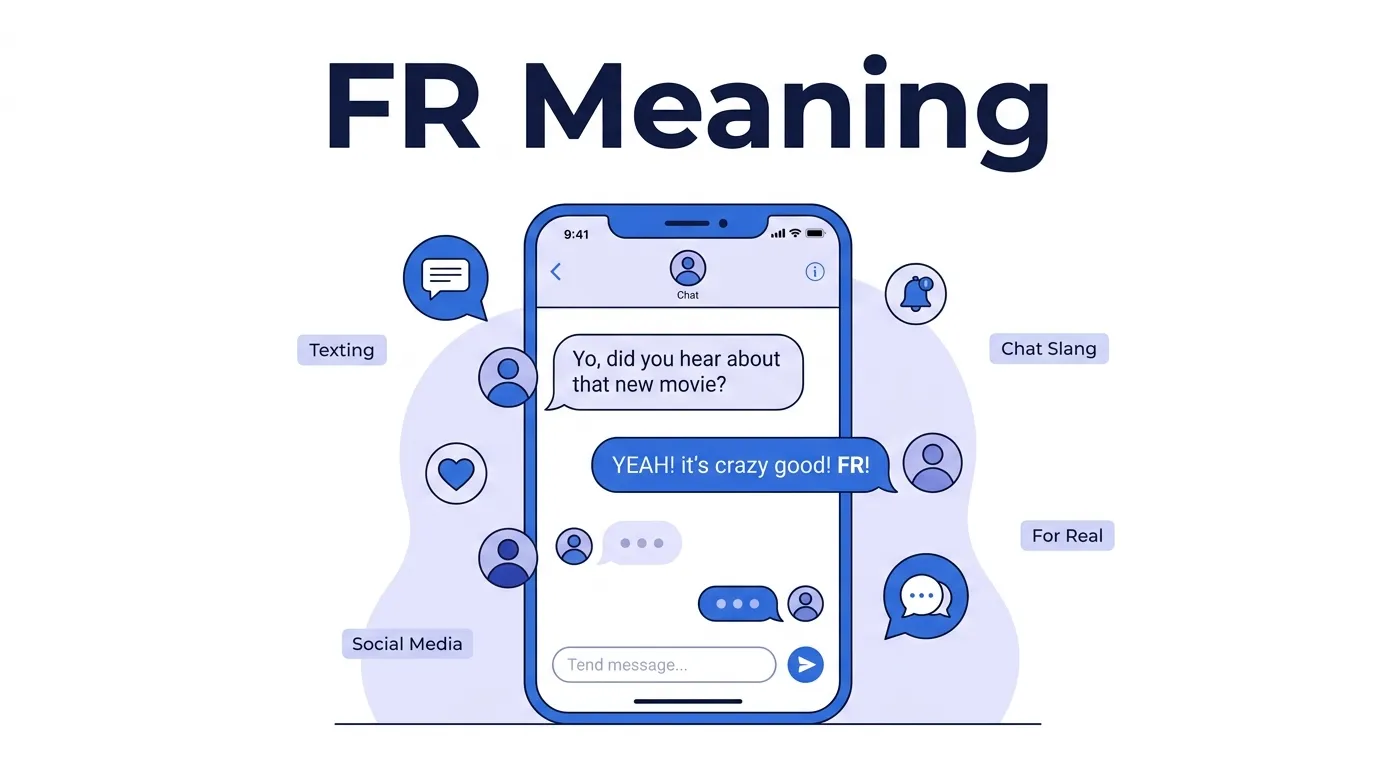
FR stands for for real. People use it to show they mean what they just said. It works like a stamp of truth on a sentence. You can say I’m tired fr to mean I am really tired. It fits at the end of a sentence or stands alone as its own reply. Some people double it up as fr fr to sound even more serious. It is casual. It belongs in texts, chats, and social posts, not in formal writing.
Origin
FR grew out of everyday spoken slang. People have said for real for many decades to stress that something is true. Texting made it shorter. Typing three letters is faster than typing seven words. Social media then pushed it further. Short clips and quick comments needed short words. FR fit that need perfectly. Gaming chats and group texts helped spread it fast. By 2026, it has become one of the most common short forms in online talk, right up there with lol and omg. Young users often say it out loud too, not just in text. It has moved from a typing shortcut into a spoken habit for many.
British vs American English
Slang like fr does not follow strict spelling rules the way words like colour and color do. Still, usage patterns differ across regions. American English speakers, especially younger users on apps based in the United States, tend to use fr the most and use it very often. British English speakers use it too, but often stick closer to the full phrase for real in writing, even while texting. Below is a simple table showing how the two groups tend to use it.
| Feature | American English | British English |
| Common form | fr | for real (fr used, but less often) |
| Doubling | fr fr is common | fr fr is less common |
| Formal writing | Never used | Never used |
| Speech habit | Said out loud often | Said out loud less often |
| Example sentence | That test was hard fr. | That test was hard, for real. |
This does not mean British users never say fr. Many do, especially teens active on global apps. But American slang trends tend to lead, and other English-speaking regions often pick up the habit later.
Which Should You Use?
Think about who will read your message. If you’re texting a friend, fr works fine anywhere in the world. It reads as casual and honest. If you’re writing to a teacher, boss, or in any formal document, skip it completely. Use genuinely or honestly instead. Age matters too. Older readers may not know what fr means. Younger readers use it daily and expect it in casual chats. Location plays a small role, but audience and setting matter more than country. When in doubt, ask yourself if you’d say for real out loud in that exact spot. If yes, fr fits. If it feels too casual, leave it out.
Common Mistakes
Many people misuse fr without realizing it. Here are the mistakes people make most, shown as wrong versus correct.
Wrong: FR. used as a complete formal sentence in a work email.
Correct: This is genuinely a great result. Save fr for casual chats only.
Wrong: Writing FR in all capital letters in every message, which can look like shouting.
Correct: Use lowercase fr unless you want strong emphasis on purpose.
Wrong: Confusing fr with Fr. as a title, like Fr. Michael for a priest.
Correct: Check context. A period after Fr usually means Father, a religious title, not slang.
Wrong: Using fr in a school essay or report.
Correct: Replace it with words like truly or in fact for schoolwork.
Wrong: Assuming everyone knows what fr means.
Correct: Spell out for real when writing to someone unfamiliar with slang, like a grandparent or new coworker.
These small mix-ups can confuse readers or make writing look sloppy in the wrong setting. Knowing the difference protects your tone.
Everyday Examples
Here is how fr looks across different types of writing.
Email (casual, between coworkers who know each other well): That client call was rough fr, but we got through it. Let’s regroup tomorrow.
Headline (for a pop culture or entertainment site): This New Show Is the Best Thing on TV Right Now, Fr.
Social post: Woke up at 5am to catch the sunrise and it was worth it fr fr 🌅
Formal sentence (where fr should NOT appear, shown correctly instead): The results of this study are, in fact, more significant than we expected.
Notice how fr only shows up in casual spots. The formal sentence swaps it out completely. That swap is the whole trick to using this word well.
Trends and Usage Data
Slang usage shifts fast, and fr has grown steadily through 2026. It shows up heavily in comment sections, group chats, and short-form video captions. Gaming communities use it constantly during live matches. Music and entertainment fan accounts use it to react to news. Workplace slang channels, like casual internal chat apps, also show rising use among younger employees, though almost never in client-facing messages.
| Region | Platform Type | Usage Frequency (2026) |
| United States | Texting and social apps | Very high |
| United Kingdom | Texting and social apps | High |
| Canada | Texting and social apps | High |
| Australia | Texting and social apps | Moderate to high |
| Formal business writing (any region) | Email and reports | Very low |
The pattern is clear. Fr thrives in fast, casual spaces. It nearly disappears in slow, formal ones. That split is not likely to change soon, since formal writing tends to hold onto older, fuller phrasing no matter what trends online.
FAQs
Does fr mean for real or something else?
Yes, fr almost always means for real. It shows the speaker is being honest or serious about what they just said.
Is fr rude to use in a text?
No, fr is not rude. It is casual and friendly. It simply is not fit for formal writing or serious documents.
Can I use fr in a school essay?
No, you should not use fr in school essays. Teachers expect formal words like truly or in fact instead.
What does fr fr mean compared to just fr?
Fr fr means the same thing but with extra stress. People double it to sound even more certain or excited.
Conclusion
The fr meaning is simple once you see it clearly. It stands for for real and shows honesty or emphasis in casual writing. Use it in texts, social posts, and friendly chats. Avoid it in emails to your boss, school papers, or formal reports.
American English speakers use it most, but it has spread worldwide through texting and social media. When you’re unsure, picture whether you’d say for real out loud in that spot. If yes, fr works. If not, choose fuller, more formal words instead. Simple choice, better writing, every time.
Discover More Post
- What Does Wyll Mean? Everything You Need to Know
- What Does DC Mean? Full Guide to Every Meaning
- What Is YN? The Simple Meaning You Need to Know
- BC Full Form in Chat: Complete Guide for Beginners

At Goffaws.com, we celebrate words that move, inspire, and connect us—and few voices have done that better than Maya Angelou. A poet, author, and civil rights icon, Angelou used her powerful storytelling to speak truth, courage, and compassion into the world. Her timeless wisdom reminds us that even in struggle, there is beauty; even in silence, there is power. Join us as we explore the life, legacy, and lessons of one of history’s most inspiring voices.