In today’s fast-paced digital world, texting slang evolves quickly, leaving many people scratching their heads over simple abbreviations.
If you’ve ever received a kk and wondered if it was positive, neutral, or something else, you’re not alone.
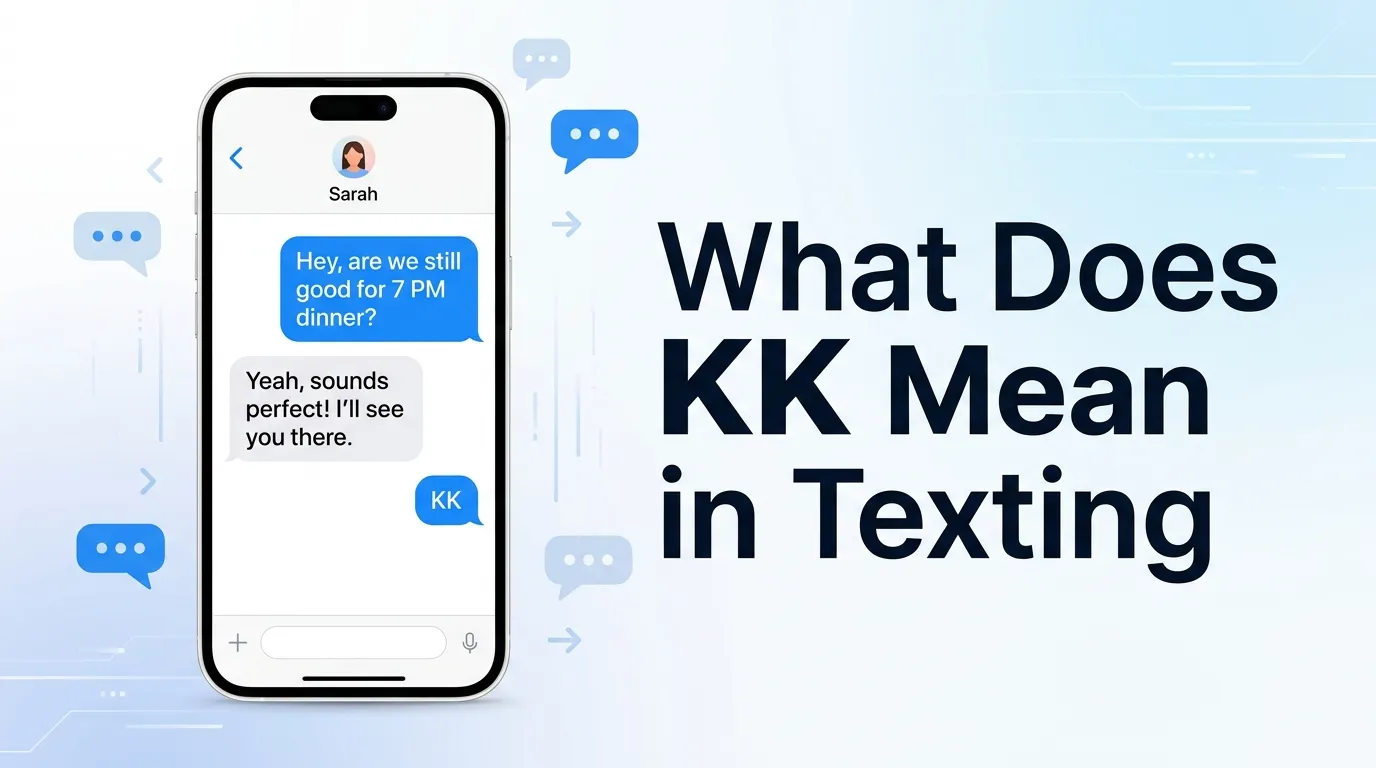
KK simply means okay a casual, upbeat way to acknowledge a message, show agreement, or confirm you’ve understood without adding extra words.
This shorthand has become a staple in casual conversations among friends, family, coworkers, and gamers.
Unlike the curt single k, which can feel dismissive, kk lands as warmer and more engaging.
It signals got it or message received in a light, friendly tone. Whether you’re a parent decoding your teen’s texts, a professional navigating group chats, or just someone who wants to communicate better online, understanding kk helps prevent awkward mix-ups.
In this comprehensive guide, we’ll break down its origins, real-life uses, differences from similar terms, best practices, and more.
By the end, you’ll confidently use and interpret this everyday texting abbreviation.
The Origins and Evolution of KK in Texting
Texting slang like kk emerged from the need for speed and efficiency on early mobile phones with limited characters and tiny keyboards. Its roots trace back to the early 2000s, possibly as a reduplication of k (short for okay) or from k, kewl meaning okay, cool. Over time, it solidified as a reliable acknowledgment tool.
By the 2010s, with the explosion of smartphones and apps like iMessage, WhatsApp, and Discord, kk spread globally. Today in 2026, it remains popular across generations, though younger users (Gen Z and Alpha) often blend it with emojis or newer slang. It’s especially common in the U.S., Australia, and English-speaking online communities.
The double k makes it feel softer and less abrupt than a lone k. Linguists note that repetition in language often softens tone or adds emphasis, turning a basic confirmation into something friendlier.
How KK Differs from K, OK, and Okay
One of the biggest sources of confusion is how kk stacks up against its cousins. The tone can shift dramatically based on the exact form:
- K: Often seen as cold, passive-aggressive, or ending the conversation abruptly. Many interpret it as I don’t care or whatever. Avoid this in important chats.
- KK: Friendly acknowledgment. It’s like nodding and saying gotcha with a smile. Positive and efficient.
- OK or Ok: Neutral and clear. Slightly more formal than kk but still casual.
- Okay or O.K.: Full version for clarity, especially in professional or serious contexts. Feels more thoughtful.
These nuances matter because digital communication lacks tone of voice and facial expressions. What seems minor to the sender can land differently on the receiver.
Comparison Table: Texting Okay Variations
| Variation | Tone/Meaning | Best Used For | Potential Misinterpretation | Example Response |
| K | Cold, dismissive | Rarely; quick shutdowns | Anger or disinterest | See you at 8? K (feels rude) |
| KK | Friendly, acknowledging | Casual chats, confirmations | Almost none | See you at 8? Kk (warm) |
| OK / Ok | Neutral, straightforward | Everyday use, work | Mild indifference if overused | See you at 8? Ok |
| Okay | Clear, engaged | Important topics, parents | None | See you at 8? Okay |
This table highlights why kk often wins for casual positivity. It strikes a perfect balance quick yet not curt.
Real-Life Examples of KK in Action
Understanding kk clicks best with context. Here are everyday scenarios:
Imagine your friend texts: I’m running 10 minutes late to dinner. You reply kk it means no problem, I got the update. Simple and reassuring.
In a group chat planning a hike: Meet at the trailhead at 9am? Multiple people reply kk. It keeps the momentum without cluttering the thread.
During gaming: Enemy at your six! A quick kk tells your teammate you’ve adjusted without pausing the action.
Romantic context: Love you, heading home now. Kk babe feels affectionate and acknowledging, while a lone k might spark unnecessary worry.
Parents often see kk from kids as a quick yes or understood, such as Dinner’s ready at 6. Kk confirms without drama.
These examples show kk shines in fast, low-stakes exchanges where full sentences would slow things down.
When and Where to Use KK Effectively
KK works wonderfully in informal settings:
- Text messages with friends and family
- Social media DMs
- Online gaming and Discord
- Quick work confirmations with close colleagues
- Dating apps or casual flirting
Avoid or use sparingly in:
- Job interviews or formal emails (stick to Okay or full sentences)
- Sensitive conversations about feelings or conflicts
- With older relatives who might not understand slang
Pair it with emojis for extra warmth: kk 👍 or kk see you soon 😊. This enhances clarity in 2026’s emoji-rich chats.
Common Mistakes and How to Avoid Them
Many people misuse similar abbreviations, causing tension. Here’s a quick reference:
Actionable Checklist for Better Texting with KK and Similar Terms
- Match the tone: Use kk for casual positives; save okay for emphasis.
- Add context if needed: Kk, on my way! beats a bare reply.
- Watch punctuation: Kk. feels slightly more final than kk.
- Consider your audience: Older family? Spell it out more.
- Don’t over-rely: Mix in full responses to show engagement.
- Read the room: In serious chats, avoid slang altogether.
- Double-check before sending: What feels neutral to you might not to them.
Following this checklist prevents most misunderstandings. Real experience shows that thoughtful texting builds stronger relationships digital or otherwise.
Broader Context: Texting Slang in 2026
KK fits into a rich ecosystem of abbreviations. Popular ones include LOL (laughing out loud), BRB (be right back), BTW (by the way), IDK (I don’t know), and newer terms like bet (sounds good) or fr (for real).
Mastering these improves overall communication. KK stands out because of its reliability it rarely offends when used right, unlike the infamous single k. As hybrid work and online socializing continue, strong digital etiquette separates good communicators from the rest.
Think of kk like a verbal thumbs-up. It keeps conversations flowing smoothly without demanding much effort.
Tips for Teaching Others (Especially Parents and New Texters)
If you’re explaining what does kk mean in texting to someone older or less tech-savvy, keep it simple: It’s a friendly way to say ‘okay’ or ‘got it.’ Share the comparison table above and a few examples.
Encourage practice in low-pressure chats. Over time, they’ll notice how small choices in wording affect how messages are received. This knowledge boosts confidence in a world where much interaction happens via screens.
FAQs
Q: What does KK mean in texting from a girl?
A: KK from a girl usually means okay and shows she understands or agrees with the message.
Q: What does KK mean in texting from a guy?
A: KK from a guy usually means okay and is a quick friendly way to confirm something.
Q: What does KK mean in texting according to Urban Dictionary?
A: Urban Dictionary generally describes KK as a casual way of saying okay or message received.
Q: Is KK rude in texting?
A: KK is usually not rude though the tone depends on the conversation and context.
Q: What does KK mean on Snapchat?
A: On Snapchat KK simply means okay and is often used as a fast reply.
Q: What is the meaning of K or KK?
A: K and KK both mean okay but KK often sounds a little friendlier than K.
Q: What does K mean in text from a girl?
A: K from a girl usually means okay but it can sometimes sound short or distant depending on the situation.
Q: What does KK mean in school?
A: In school chats KK usually means okay and is used to acknowledge instructions or messages.
Conclusion
What does KK mean in texting? boils down to a friendly, efficient okay that acknowledges messages warmly. Its subtle advantages over k or even ok make it a favorite for keeping digital chats positive and flowing. By understanding its nuances, origins, and best uses, you avoid pitfalls and communicate more effectively.
Next time you type kk, know you’re using a time-tested tool that bridges speed and friendliness. Practice mindfully, mix in full sentences when it counts, and watch your relationships benefit. Got a specific texting scenario you’re unsure about? Drop it in the comments happy to help decode more slang!
Discover More Post
- GL Meaning in Text Full Guide for 2026
- What Does IMA Mean in Text Explained with Real Examples
- MYB Meaning in Text Everything You Need
- GOMD Meaning: What It Really Stands For (Slang Guide 2026)

As Mark Twain once said, “The human race has only one really effective weapon, and that is laughter.” At Goffaws.com, we couldn’t agree more—especially when it comes to CrossFit puns and jokes. Fitness may be about strength and endurance, but a good laugh can be the best workout of all. From playful gym humor to clever word twists that would make Twain chuckle, we’re here to prove that comedy and conditioning are the perfect pair.