The suffix -ly is one of the most useful tools in English. It primarily turns adjectives into adverbs, showing how, when, or in what manner something happens.
For example, quick becomes quickly in She ran quickly.
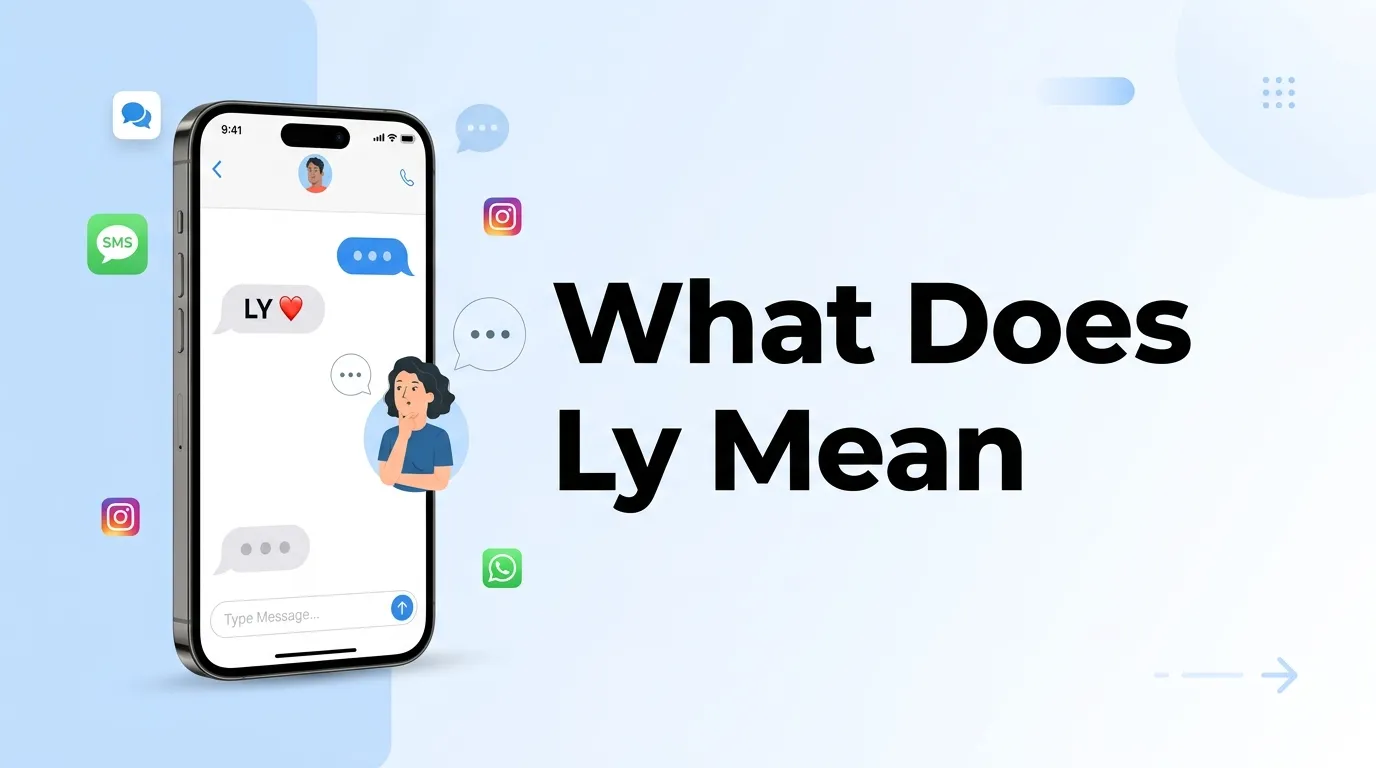
People searching what does ly mean are often students, writers, or non-native speakers trying to improve grammar, spelling, or understand casual texting where LY stands for love you or love ya.
This guide covers everything from definitions and origins to real-world examples, spelling rules, and pitfalls. You’ll gain clear, actionable knowledge to use -ly confidently in writing and speech.
You’re crafting professional emails, school essays, or social media posts, mastering the -ly suffix boosts clarity and precision. Let’s dive in.
What Is the -Ly Suffix? Core Definition and Origins
The -ly suffix is a versatile ending in English. Its main job is forming adverbs from adjectives, indicating manner, degree, or frequency. It comes from Old English -lice, related to like, meaning in the manner of or like. Over time, it evolved into the modern form we use today.
In dictionaries, -ly has a few related roles:
- Adverb-forming: gladly, gradually, secondly.
- Adjective-forming (less common): friendly, lovely, manly (meaning like the base noun).
- Frequency: daily, hourly, weekly (every specified time period).
This suffix appears across thousands of words, making English expressive. Without it, sentences feel flat: She sang beautiful versus the vivid She sang beautifully.
How the -Ly Suffix Works in Grammar
Adverbs with -ly answer questions like How? When? or To what extent? They modify verbs, adjectives, or other adverbs.
- Verb modification: He spoke confidently during the presentation.
- Adjective modification: The extremely tall building dominated the skyline.
- Adverb modification: She finished the race surprisingly quickly.
In everyday communication, -ly words add nuance. A doctor might say a patient is recovering steadily, while a teacher notes a student works diligently.
Ly suffix meaning goes beyond grammar it shapes tone. He answered rudely paints a different picture than He answered.
Spelling Rules for Adding -Ly: Master the Exceptions
Adding -ly follows predictable patterns, but exceptions trip up many writers. Here are the key rules:
- Most adjectives: Simply add -ly. Quick → quickly, bright → brightly.
- Words ending in -y: Change y to i, then add -ly. Happy → happily, angry → angrily. Exceptions (keep y): shyly, slyly, dryly.
- Words ending in -le: Drop the e and add -y. Gentle → gently, simple → simply.
- Words ending in -ic: Usually add -ally. Basic → basically. Exception: public → publicly.
- Words ending in -e: Keep the e and add -ly. Brave → bravely. Exceptions: true → truly, due → duly, whole → wholly.
These rules help avoid common spelling errors that affect readability and professionalism.
Real-Life Examples of -Ly Words in Action
Consider these sentences using adverbs ending in ly:
- The team worked collaboratively to meet the deadline.
- She smiled warmly at the unexpected gift.
- He drove carefully through the heavy rain.
In storytelling: The detective moved stealthily through the shadows, investigating methodically.
Business writing benefits too: We successfully launched the product, and sales grew steadily.
Here’s a useful table of common -ly adverbs:
Common -Ly Adverbs Quick Reference
| Category | Examples | Sentence Example |
| Manner | quickly, slowly, happily | She learned quickly. |
| Degree/Intensity | extremely, completely, highly | It was extremely helpful. |
| Frequency | daily, weekly, monthly | Check your email daily. |
| Attitude | sadly, angrily, hopefully | Hopefully, it will rain soon. |
This table shows how versatile the suffix is across contexts.
Comparison: Common Mistakes vs. Correct Usage
Many learners struggle with when and how to use -ly. Here’s a comparison table:
Common Mistakes vs. Correct -Ly Usage
| Mistake Example | Correct Version | Why It Matters |
| She sings beautiful. | She sings beautifully. | Adverb needed to describe action. |
| He runs more fast. | He runs faster. / more quickly. | Use -ly or comparative forms properly. |
| The food tasted badly. | The food tasted bad. | Linking verbs like taste often take adjectives. |
| Trueful (wrong) | Truly | Spelling exception. |
| Publicly (correct) vs. publically | Publicly | Specific exception to -ic rule. |
Understanding these differences prevents embarrassing errors and improves overall writing quality.
Actionable Checklist: Using -Ly Like a Pro
Use this quick reference checklist for your writing:
- Identify the need: Does the word describe how an action happens? Add -ly if yes.
- Apply spelling rules: Check ending of base word (y, le, ic, e).
- Test the sentence: Read alouddoes it flow naturally?
- Avoid overuse: Not every sentence needs an -ly adverb. Strong verbs often suffice.
- Proofread exceptions: Truly, wholly, publicly, etc.
- Context check: Formal writing? Use precise -ly words. Casual? Consider slang alternatives.
- Practice daily: Rewrite 5 sentences without -ly, then add appropriate ones.
Following this checklist turns confusion into confidence.
Other Contexts: -Ly in Texting, Slang, and Beyond
Beyond grammar, LY in texting means love you or love ya. It’s a casual abbreviation for affection: Goodnight, LY! This usage is popular among friends, family, and couples in messages and social media.
The .ly domain extension (for Libya) is used creatively in tech, like Bit.ly for link shortening.
In other languages, equivalents exist (e.g., Spanish -mente), highlighting how English -ly is part of broader linguistic patterns for modifying meaning.
Tips for Non-Native Speakers and Writers
If English is your second language, focus on listening to native speakers. Podcasts and audiobooks reveal natural -ly usage. Practice by transforming adjectives: kind → kindly, careful → carefully.
Writers should vary sentence structure. Mix -ly adverbs with other descriptive techniques for engaging prose. Tools like grammar checkers help spot issues, but understanding the why builds lasting skill.
Common Pitfalls and How to Avoid Them
Overusing -ly makes writing feel wordy (e.g., He walked slowly and carefully vs. He crept cautiously). Some adjectives don’t need -ly (fast, hard, late can function as adverbs).
Confusing adjectives and adverbs is frequent: I feel badly (wrong if describing emotion) vs. I feel bad. Learn linking verbs (feel, seem, look, taste) typically pair with adjectives.
FAQs
Q: What does LY mean in text from a guy?
A: LY usually means Love You and shows care affection or closeness in a text message.
Q: What does LY mean in Urdu?
A: In Urdu LY usually means Love You which translates to Main Tum Se Mohabbat Karta Ya Karti Hoon.
Q: What does LY mean in chat?
A: LY commonly stands for Love You in online chats and text conversations.
Q: What does LY mean from a girl?
A: When a girl says LY it usually means Love You as a sweet or caring expression.
Q: What does LY mean in WhatsApp?
A: On WhatsApp LY most often means Love You in personal conversations.
Q: What does LY mean in Snapchat?
A: On Snapchat LY typically stands for Love You in friendly or romantic messages.
Q: Does LY mean love you?
A: Yes LY is a common abbreviation that means Love You in texting and social media.
Q: What is the full form of LY?
A: The most common full form of LY in texting is Love You.
Conclusion
The -ly suffix is more than an endingit’s a gateway to clearer, more vivid English. From turning happy into happily to casual LY texts, it enriches communication in countless ways. Remember the core rules, practice with examples, and use the checklists provided.
Start applying these insights today. Rewrite a paragraph from your recent writing using -ly adverbs thoughtfully. Your readers (and search engines) will notice the improvement. For more grammar guides, explore our resources on suffixes and sentence structure.
Discover More Post
- GL Meaning in Text Full Guide for 2026
- What Does IMA Mean in Text Explained with Real Examples
- MYB Meaning in Text Everything You Need
- GOMD Meaning: What It Really Stands For (Slang Guide 2026)

As Mark Twain once said, “The human race has only one really effective weapon, and that is laughter.” At Goffaws.com, we couldn’t agree more—especially when it comes to CrossFit puns and jokes. Fitness may be about strength and endurance, but a good laugh can be the best workout of all. From playful gym humor to clever word twists that would make Twain chuckle, we’re here to prove that comedy and conditioning are the perfect pair.