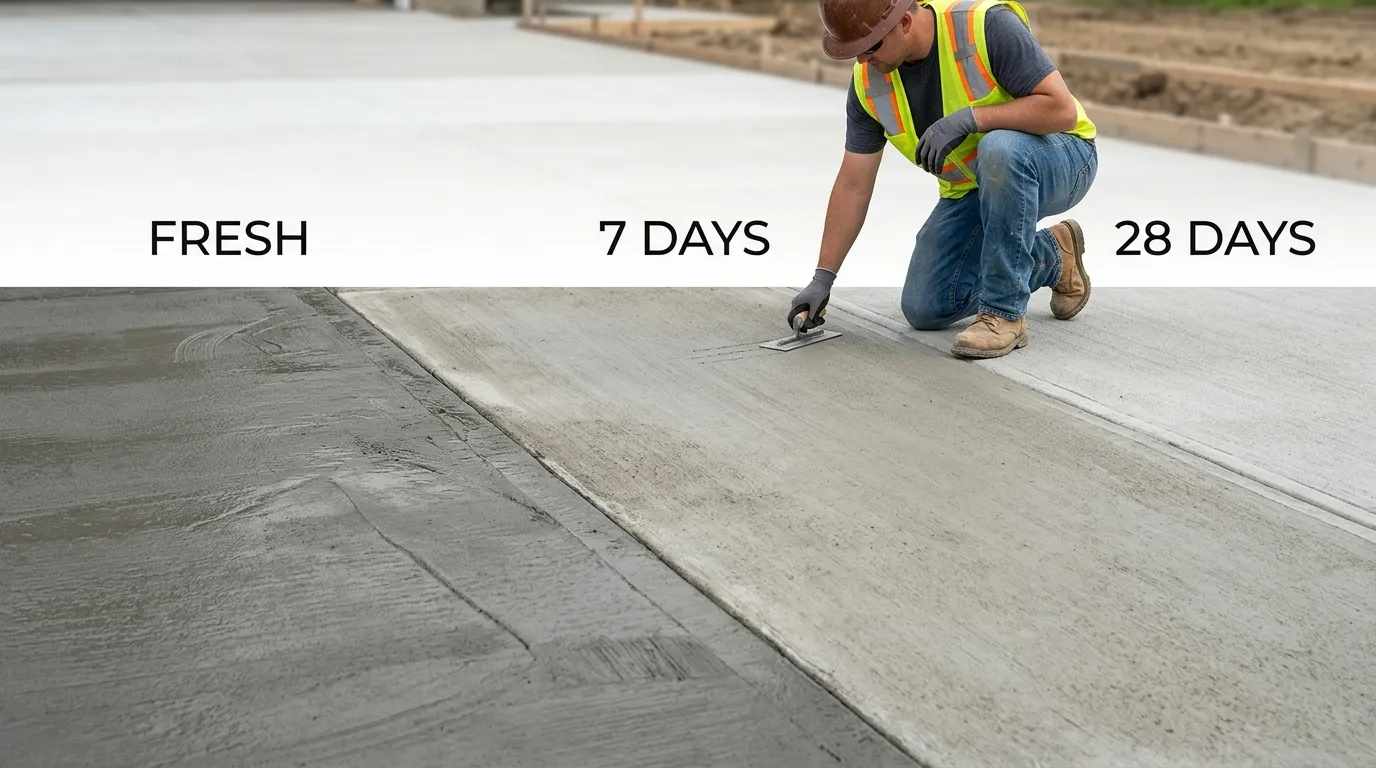
If you are wondering how long for concrete to cure, the simple answer is about 28 days for concrete to reach its typical design strength.
However, that does not mean you have to wait a full month before using it. Concrete becomes hard enough for light foot traffic much sooner, while driveways, floors, and areas exposed to heavy loads need more time.
Concrete curing is more than just letting the surface dry. During curing, cement reacts with water in a process called hydration.
This reaction helps concrete become stronger and more durable over time. Temperature, moisture, concrete mix, slab thickness, and weather can all affect the curing process.
In this guide, you will learn how long concrete takes to cure, when you can safely walk or drive on it, how weather affects curing, and what you can do to help new concrete develop strength properly.
How Long Does Concrete Take to Cure?
Most concrete takes about 28 days to reach its standard design strength, but curing starts as soon as the concrete is placed. The exact timeline can vary based on the concrete mix, weather, moisture, temperature, and the type of project.
During the first few hours, fresh concrete begins to set and should be protected from traffic, strong wind, heavy rain, and extreme temperatures. After about 24 to 48 hours, many concrete surfaces are firm enough for careful foot traffic, although they are still gaining strength.
At around 7 days, concrete has developed a large portion of its expected strength. By 14 days, it is considerably stronger, but curing continues. The 28-day mark is commonly used as a reference point for checking concrete strength.
It is also important to understand that curing is not the same as drying. Concrete needs moisture for cement hydration, so allowing it to dry too quickly can hurt its final strength and durability. Proper curing helps reduce surface problems and supports long-term performance.
Concrete Curing Timeline: 24 Hours to 28 Days
Concrete gains strength gradually, so its condition changes from day to day. Knowing what happens during each stage helps you avoid using a new slab too soon.
During the First Few Hours
Fresh concrete is still setting and can be easily damaged. Keep people, pets, tools, and vehicles away from the surface. Protect it from strong wind, extreme heat, and sudden temperature changes.
After 24 Hours
The surface is usually much firmer, but the concrete is still relatively weak. Careful foot traffic may be possible in some situations, but avoid dragging objects or placing heavy loads on it.
After 48 Hours
Concrete has gained more early strength and may handle light everyday use. However, heavy equipment, vehicles, and concentrated loads can still cause damage.
After 7 Days
Concrete has developed much of its early strength, although curing continues. Many projects can handle increased use at this stage when conditions are suitable.
After 14 Days
Strength continues to build steadily. The concrete is stronger and more durable, but it has not reached the common 28-day benchmark.
After 28 Days
Twenty-eight days is widely used as the standard strength reference. Concrete can continue gaining strength beyond this point under suitable conditions.
How Long Before You Can Walk on Concrete?
Fresh concrete needs time to gain enough strength before people start using it. In many normal conditions, light foot traffic may be possible after about 24 to 48 hours. However, this is only a general guideline, not a guarantee for every project. Temperature, concrete mix, moisture, and curing conditions can change the timeline.
Light Foot Traffic
Walking carefully across a properly cured surface after the initial waiting period is usually less demanding than driving or carrying heavy loads. Avoid unnecessary walking during the first day because footprints or surface damage can become permanent.
Furniture and Light Objects
If the concrete is indoors, wait until it has gained enough early strength before placing furniture on it. Use care when moving items, and avoid dragging heavy furniture across the surface.
Heavy Foot Traffic
Construction workers, crowds, carts, and repeated activity can place more stress on young concrete. If the area will experience heavy use, allowing additional curing time is a safer approach.
Remember, hard does not mean fully cured. Concrete can feel solid while continuing to develop strength internally for weeks. Always follow the project specifications when a specific strength requirement applies.
How Long Before You Can Drive on New Concrete?
Driving on fresh concrete too early can leave marks, cause cracks, or weaken the surface before it has developed enough strength. A new driveway may look hard after a few days, but the concrete is still curing beneath the surface. For this reason, vehicle traffic should be delayed longer than normal walking.
Passenger Cars
A common recommendation is to wait around 7 days or longer before allowing normal passenger-car traffic, depending on the concrete mix, weather, and project requirements. Some driveways may need more time, especially during cool or wet conditions.
Trucks and Heavy Vehicles
Heavy trucks, trailers, construction equipment, and other large vehicles create much greater loads. These should generally stay off new concrete until it has reached the strength required for the project.
Driveways vs. Roads
A residential driveway may have different thickness, reinforcement, and concrete specifications than a commercial road. Because of these differences, there is no single waiting period that works everywhere.
When possible, keep vehicles away until the concrete has developed adequate strength. Following the installer’s instructions is the safest way to protect your new surface from premature damage.
How Long Does a Concrete Driveway Take to Cure?
A concrete driveway needs time to develop enough strength for regular vehicle use. While the surface may look finished within a day or two, the concrete underneath is still curing. In normal conditions, 28 days is commonly used as the full-strength benchmark, but lighter use can often begin much earlier.
Driveway Curing Timeline
During the first 24 to 48 hours, keep people and vehicles away from the surface. Around 7 days, the concrete has gained substantial early strength, but it may still be vulnerable to heavy or repeated loads. By 28 days, it has typically reached its specified design strength when properly mixed and cured.
When Can You Park on a New Driveway?
Avoid parking vehicles too soon, especially heavy trucks, trailers, or vehicles that remain in one spot for long periods. The weight can stress immature concrete and increase the chance of surface damage.
How to Protect a New Driveway
Keep traffic away, maintain suitable curing conditions, and avoid harsh temperature changes when possible. Do not use the driveway simply because it feels hard. The concrete’s strength development, not surface appearance alone, determines when heavier use is appropriate.
How Long Does a Concrete Slab Take to Cure?
A concrete slab usually follows the same basic curing process as other concrete, but its thickness, location, mix, and intended use can affect the timeline. The common 28-day benchmark applies to many projects, yet a slab may become usable for light activities much earlier.
Indoor Concrete Slabs
Garage floors, basement floors, and interior slabs need protection from premature loads and rapid moisture loss. Even when the surface feels firm, avoid heavy equipment and concentrated loads until the concrete has gained enough strength for its intended use.
Outdoor Concrete Slabs
Patios, walkways, and shed bases face additional challenges from sunlight, wind, rain, and temperature changes. These conditions can affect moisture loss and strength development, making proper curing especially important.
Why Slab Thickness Matters
Thicker concrete can behave differently from a thin slab because moisture and temperature conditions within the concrete are not identical throughout its depth. The concrete mix and environmental conditions also matter.
For a specific project, follow the contractor’s instructions or construction specifications rather than relying only on a general timeline. Curing time should match the concrete’s required strength and intended load, not simply how hard the surface feels.
What Factors Affect Concrete Curing Time?
Concrete does not cure at exactly the same speed on every project. Several conditions can change how quickly it develops strength. Understanding these factors can help you protect fresh concrete and avoid using it before it is ready.
Temperature
Temperature has a major effect on curing. Moderate conditions generally support steady strength development, while very cold weather slows hydration. Excessive heat can cause moisture to leave the surface too quickly.
Humidity
Low humidity can increase evaporation, especially when combined with wind and high temperatures. Higher humidity can help reduce moisture loss from the concrete surface.
Concrete Mix
The type of cement, water-to-cement ratio, admixtures, and overall mix design can affect strength development. Some mixes are designed to gain strength faster than others.
Thickness
The thickness of a slab can influence its internal temperature and moisture conditions. Thick sections may require different curing considerations than thin surfaces.
Weather
Sunlight, wind, rain, and sudden temperature changes can all affect fresh concrete. Strong wind and direct sun can increase evaporation, while cold conditions can slow hydration.
Curing Method
Water curing, protective coverings, and curing compounds can help maintain suitable moisture and temperature conditions during early strength development.
Does Concrete Cure Faster in Hot Weather?
Hot weather can make concrete set faster, but faster setting does not always mean better or faster overall curing. High temperatures increase the rate of cement hydration, yet they can also cause water to evaporate from the surface too quickly. That moisture loss can create surface cracking and reduce the quality of the finished concrete.
What Heat Does to Fresh Concrete
Warm conditions can help concrete develop early strength more quickly. However, extremely hot conditions may make the concrete harder to place, finish, and cure properly. Direct sunlight and dry air can increase evaporation even further.
Risks of Very Hot Weather
Rapid moisture loss can lead to plastic shrinkage cracks while the concrete is still young. The surface may also become weaker if it dries before adequate hydration occurs.
How to Cure Concrete in Hot Weather
Protect fresh concrete from excessive heat, direct sun, and strong wind when possible. Use an appropriate curing method to help retain moisture and maintain suitable conditions. The exact approach depends on the mix and project.
The key point is simple: hot weather can speed early reactions, but controlling moisture is essential for strong, durable concrete. Following proper hot-weather curing practices is more important than simply trying to make concrete cure faster.
Does Concrete Cure Slower in Cold Weather?
Yes, cold weather can slow concrete curing because lower temperatures reduce the rate of cement hydration. Fresh concrete needs suitable conditions to develop strength, so a cold environment can extend the time needed before the surface is ready for normal use.
How Cold Affects Curing
When temperatures drop, the chemical reactions inside concrete happen more slowly. This means the concrete may take longer to reach the strength expected at a certain age. A surface that normally becomes firm quickly may remain weaker for longer during cold conditions.
Freezing Risk
Freezing is a serious concern for fresh concrete. If newly placed concrete freezes before developing enough strength, the expanding water can damage its internal structure and reduce its long-term performance.
Winter Concrete Curing
During cold weather, concrete should be protected from freezing and excessive heat loss. Insulating blankets, protective coverings, and temperature monitoring may be used when appropriate for the project.
Avoid assuming that a calendar-based waiting period is enough during winter. Concrete strength develops according to actual conditions, not simply the number of days that have passed. For important structural work, follow the specified cold-weather procedures and strength requirements rather than relying on general curing times.
Can Concrete Cure in the Rain?
Concrete can continue curing in wet conditions because water is an important part of cement hydration. However, rain can still cause problems when it falls on very fresh concrete. The main concern is not that rain stops curing, but that heavy rainfall can damage the surface before it has properly set.
Rain Before Concrete Sets
If rain reaches freshly placed concrete, it can disturb the surface, wash out cement paste, and create an uneven or weak finish. Heavy rain can be especially troublesome during the early setting stage.
Rain After Concrete Has Set
Once concrete has set enough to resist surface damage, normal rain is generally much less concerning. Moisture can actually help prevent the surface from drying too quickly, provided the concrete is already firm.
Should You Keep Concrete Wet?
Controlled moisture is different from allowing uncontrolled rain to hit fresh concrete. Proper curing aims to maintain suitable moisture and temperature conditions without damaging the surface.
If rain is expected soon after placement, protect the concrete when practical without touching or disturbing the fresh surface. Always consider the concrete’s setting stage and weather conditions, rather than assuming every rainy day will either help or harm curing.
How Does Concrete Actually Cure?
Concrete cures through a chemical process called cement hydration. It is not simply a matter of water evaporating and the concrete becoming hard. When cement, water, and other ingredients are mixed, the cement particles begin reacting with water. This reaction gradually forms compounds that bind the mixture together and create strength.
What Is Cement Hydration?
Hydration starts soon after water contacts cement. The reaction continues for days, weeks, and even longer under suitable conditions. As hydration progresses, the concrete develops a stronger internal structure.
The Role of Water
Water is essential for hydration. This is why fresh concrete should not be allowed to dry out too quickly. If too much moisture disappears from the surface during the early stages, strength and durability can suffer.
How Strength Develops
Concrete normally gains strength quickly during its early days, then continues developing strength at a slower rate. The 28-day strength is commonly used as a reference for concrete specifications, but hydration does not suddenly stop at that point.
Good curing helps maintain the moisture and temperature needed for hydration. Instead of thinking of curing as “drying concrete,” think of it as creating the right conditions for concrete to become stronger.
What Is the Difference Between Concrete Setting and Curing?
Setting, curing, and drying are three different stages that are often confused. Understanding the difference makes it easier to know why concrete can feel hard while still needing plenty of time to gain strength.
Setting
Setting happens soon after concrete is placed. The mixture changes from a workable material into a firm mass. Initial and final setting describe how the concrete loses its ability to flow and becomes stable enough for the next stage.
Curing
Curing is the process of maintaining suitable moisture and temperature conditions so cement hydration can continue. It supports strength development and helps improve the long-term durability of concrete.
Drying
Drying means moisture is leaving the concrete. This can happen while concrete is curing, but drying too quickly is not desirable during early strength development. Concrete needs water for hydration, so completely drying it out is not the goal.
Why These Terms Matter
A concrete surface may look dry and feel hard after a short time, yet the material underneath can still be developing strength. That is why appearance alone should not determine when concrete is ready for heavy traffic.
In simple terms, setting makes concrete firm, curing helps it gain strength, and drying removes moisture. Keeping these processes separate prevents many common curing mistakes.
FAQs
Q: How long should concrete cure before putting weight on it
A: Concrete usually needs about 24–48 hours before light weight and around 28 days for full strength.
Q: Concrete curing time chart
A: A typical curing guide is 24–48 hours for light use, 7 days for substantial strength, and 28 days for full design strength.
Q: How long for concrete to cure before driving on it
A: Wait at least 7 days for normal vehicle traffic, with 28 days preferred for maximum strength.
Q: How long for concrete to cure driveway
A: A new concrete driveway should generally cure for at least 7 days before driving on it and about 28 days for full strength.
Q: How long for concrete to cure at 40 degrees
A: Concrete cures much more slowly at 40°F, so it may need extra protection and significantly more time to reach strength.
Q: 4 inch concrete curing time
A: A 4-inch concrete slab typically takes about 28 days to reach its full design strength, although it becomes usable much sooner.
Q: How long does cement take to dry outside
A: Cement-based concrete usually takes about 24–48 hours to become firm but continues curing for about 28 days.
Q: How long for concrete to cure before rain
A: Fresh concrete should ideally be protected from rain for at least 4–8 hours until its surface has hardened.
Conclusion
So, how long for concrete to cure? The common answer is about 28 days to reach its typical design strength, but concrete becomes usable much sooner. Light foot traffic may be possible after 24 to 48 hours, while vehicle traffic and heavy loads require more time. The exact timeline depends on temperature, moisture, concrete mix, thickness, weather, and curing methods.
Remember that curing is not the same as drying. Concrete needs moisture for cement hydration and continued strength development. Protecting fresh concrete from extreme heat, freezing temperatures, premature traffic, and rapid moisture loss can help it perform better for years.
For everyday projects, patience and proper curing are key. When the concrete is part of a structural or heavily loaded project, always follow the specified strength requirements and professional recommendations rather than relying only on a general timeline.

At goffaws.com, we believe laughter is as vital as a strong core. Much like Harper Lee’s gift for finding humor and truth in the everyday, we’re here to celebrate the lighter side of fitness. These CrossFit puns and jokes remind us that strength isn’t only measured in reps or rounds—it’s also in the ability to laugh through the burn. So lace up, grab your barbell, and get ready to lift your spirits as high as your next personal best.