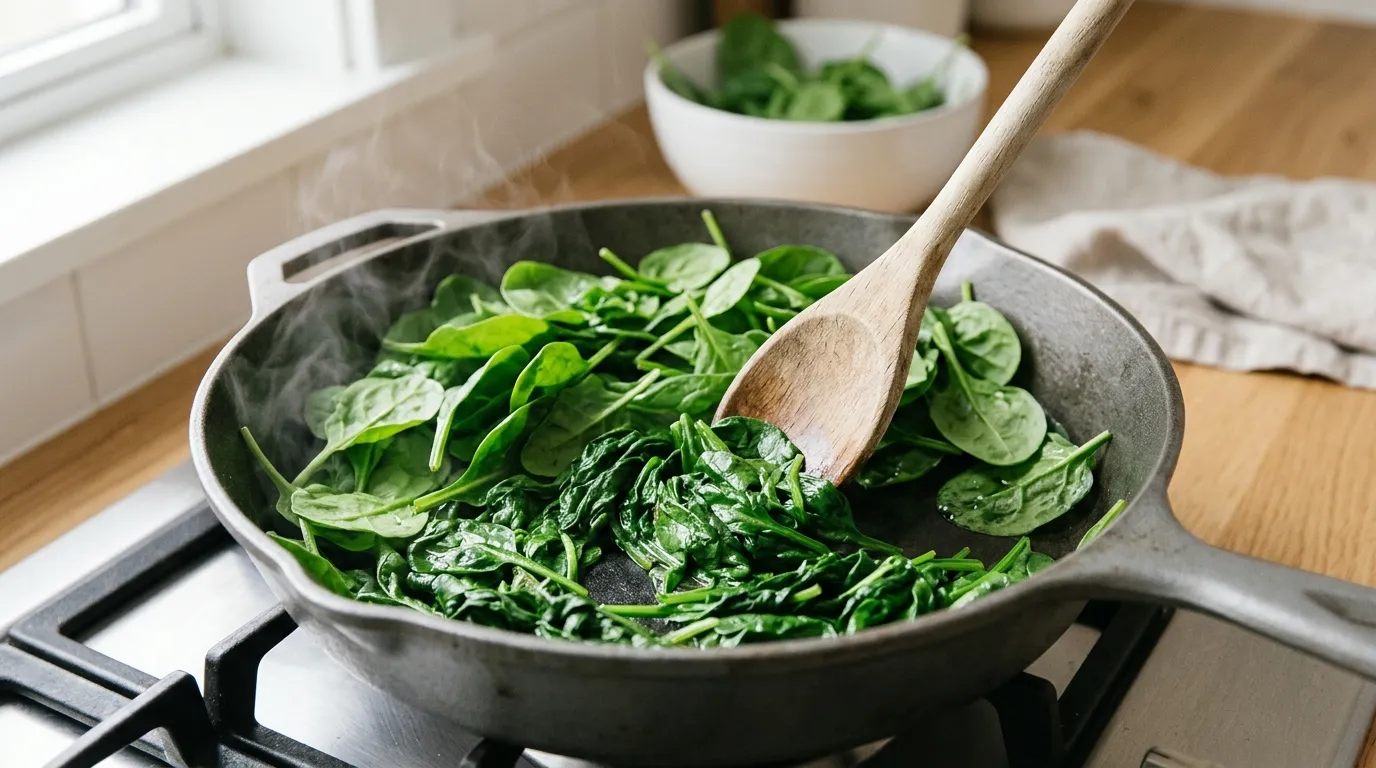
Learning how to wilt spinach is one of the easiest ways to turn fresh leafy greens into a tender and flavorful side dish.
Spinach cooks very quickly, making it a great choice when you need something simple for dinner. In just a few minutes, a large pile of fresh spinach can become soft, bright, and ready to serve.
You can wilt spinach in a skillet with olive oil, butter, or even a small splash of water. A little garlic, salt, black pepper, or lemon juice can also add plenty of flavor.
The key is to avoid cooking it for too long. Overcooked spinach can become mushy and release too much water.
In this guide, you’ll learn how to wilt spinach step by step, how long it takes, how to avoid soggy leaves, and the best ways to use your wilted spinach in everyday meals.
What Does It Mean to Wilt Spinach?
Wilting spinach means cooking the fresh leaves just enough to make them soft, tender, and smaller without turning them mushy. When raw spinach meets heat, the leaves quickly lose their firm shape and collapse. This is why a large handful of fresh spinach can look surprisingly small after cooking.
Wilted spinach is different from spinach that has been fully cooked for a long time. Properly wilted leaves should still have some texture and a fresh taste. They may become darker and softer, but they should not feel watery or fall apart completely.
Wilting is especially useful when you want to add spinach to eggs, pasta, rice, soups, sandwiches, or other dishes. It also makes the greens easier to eat and mix with other ingredients.
The process is simple: heat a pan, add a little oil or butter, add the spinach, and stir until the leaves soften. Because spinach contains plenty of natural moisture, it usually needs very little added liquid. The goal is quick, gentle cooking that keeps the leaves tender and flavorful.
What You Need to Wilt Spinach
You do not need many ingredients or special equipment to wilt spinach. A few basic kitchen items are enough to get tender, flavorful leaves in just a few minutes. Start with fresh spinach that looks green and crisp. Avoid leaves that are slimy, yellow, or heavily wilted before cooking.
For a simple method, you need a wide skillet, cooking spoon or tongs, and a small amount of olive oil or butter. A wide pan gives the leaves enough room to cook evenly instead of steaming in a crowded pile.
For seasoning, keep it simple with salt and black pepper. You can also add minced garlic, lemon juice, red pepper flakes, or grated Parmesan if you want more flavor.
Wash the spinach thoroughly under cool running water, especially if it contains visible dirt. Shake off excess water before cooking. The leaves do not need to be completely dry, but too much water can make the finished spinach watery.
With these simple ingredients and tools ready, you can move straight to the cooking process.
How to Wilt Spinach Step by Step
Wilting spinach takes only a few minutes, but using the right order helps you get tender leaves without making them watery. Follow these simple steps for a reliable result.
Wash and Prepare the Spinach
Rinse fresh spinach under cool running water to remove dirt and grit. Drain it well and gently shake off extra water. Remove any thick stems or damaged leaves if needed.
Heat the Pan
Place a wide skillet over medium heat. Add about a teaspoon of olive oil or butter and let it warm for a few seconds. The pan should be hot but not smoking.
Add the Spinach
Add the spinach to the skillet. If you have a large amount, add it in handfuls, allowing each batch to soften before adding more.
Toss and Cook
Use tongs or a spoon to turn the leaves regularly. Within a few minutes, the spinach should collapse and become tender. Stop cooking once most leaves are soft.
Season and Serve
Remove the pan from the heat, then add salt, pepper, garlic, lemon juice, or your favorite seasoning. Serve immediately for the best texture and flavor.
How Long Does It Take to Wilt Spinach?
Spinach wilts very quickly, so you do not need to spend much time at the stove. Fresh spinach usually takes about 2 to 4 minutes in a hot skillet over medium heat. The exact time depends on how much spinach you are cooking, the size of your pan, and how tender you want the leaves.
Baby spinach often wilts faster because its leaves are smaller and more delicate. Mature spinach with larger leaves may need an extra minute or two. If you are cooking a very large batch, work in smaller portions so the leaves have enough contact with the hot pan.
Instead of watching the clock alone, look at the spinach. It is ready when the leaves have noticeably collapsed, softened, and reduced in volume. They should still look fresh rather than completely broken down.
Try not to leave spinach in the hot pan after it has wilted. The remaining heat will continue cooking the leaves. Remove the skillet from the stove promptly to maintain a tender texture and avoid excess moisture.
How to Tell When Spinach Is Properly Wilted
Knowing when spinach is properly wilted is more useful than following a strict cooking time. Fresh spinach changes quickly once it touches a hot pan, so watch the leaves as they cook. Properly wilted spinach should look soft, glossy, and noticeably smaller than it was when you started.
The leaves should collapse without completely falling apart. They should feel tender when stirred but still have a little structure. If the spinach looks extremely dark, mushy, or surrounded by a large amount of liquid, it has probably been cooked too long or exposed to too much moisture.
You can also check the center of a larger leaf. It should no longer feel stiff or raw. Once most of the leaves have softened, turn off the heat and remove the pan from the burner.
Remember that spinach continues cooking from the heat already in the skillet. Removing it promptly helps preserve its texture. If you are adding wilted spinach to another hot dish, slightly undercook it because it will continue cooking with the other ingredients.
Fresh Spinach vs. Baby Spinach for Wilting
Both fresh spinach and baby spinach work well for wilting, but they can behave a little differently in the pan. Baby spinach has smaller, softer leaves and usually wilts very quickly. Its mild flavor also works well with simple seasonings such as garlic, butter, lemon, and black pepper.
Mature fresh spinach has larger leaves and firmer stems. It may take slightly longer to become tender, especially when the stems are thick. If the stems feel tough, you can remove them before cooking or give them a little extra time in the skillet.
For either type, wash the leaves well and drain away excess water before cooking. A wide skillet helps spread the spinach across the hot surface, allowing it to wilt evenly.
The best choice depends on your recipe and preference. Baby spinach is convenient for quick meals, salads, eggs, and pasta. Mature spinach has a stronger leafy texture and can work especially well in cooked side dishes, soups, and hearty recipes where you want more noticeable greens.
Do You Need Oil or Butter to Wilt Spinach?
You do not need much oil or butter to wilt spinach. A small amount is usually enough to help the leaves cook evenly and add flavor. Olive oil is a simple everyday choice because it works well with garlic, herbs, lemon, and other light seasonings.
Butter gives wilted spinach a richer taste and a softer, more savory finish. It is especially good when you plan to serve the spinach with eggs, potatoes, pasta, or creamy dishes. You can also combine a little butter with olive oil to balance flavor and cooking performance.
If you prefer to cook without added fat, spinach can wilt with its own natural moisture. A teaspoon or two of water can help start the process, particularly in a dry pan. However, adding too much water may leave the spinach soggy.
For the best texture, use just enough liquid to prevent sticking and help the leaves soften. Once the spinach collapses, continue cooking briefly until excess moisture evaporates. Then remove it from the heat and season it to taste.
How to Wilt Spinach Without Making It Soggy
Soggy spinach usually happens when there is too much moisture or the leaves stay in the pan for too long. The good news is that a few simple changes can help you get tender spinach with a much better texture.
Start by washing the leaves and draining them well. A little moisture is fine, but soaking-wet spinach can release extra water into the skillet. Use a wide pan so the leaves have enough space to cook instead of sitting in a deep, crowded pile.
Keep the heat around medium to medium-high and avoid adding unnecessary water. Toss the spinach regularly so moisture can escape and the leaves cook evenly. If you are preparing a large batch, work in smaller portions rather than filling the pan to the top.
Once the leaves have collapsed and become tender, remove them from the heat immediately. If liquid has collected in the skillet, let it evaporate briefly or drain the spinach before serving.
Most importantly, do not keep cooking wilted spinach just to make it softer. It can quickly move from tender to mushy.
How Much Does Spinach Shrink When Wilted?
One of the biggest surprises when cooking spinach is how much its volume decreases. Fresh spinach contains a lot of air between its leaves, and the leaves also hold plenty of water. Once heat breaks down the leafy structure, the spinach quickly collapses into a much smaller portion.
As a general kitchen guide, about 5 to 8 cups of raw spinach can cook down to roughly 1 to 2 cups, depending on the type of spinach, cooking method, and how thoroughly you drain it. Baby spinach may collapse especially quickly because its leaves are thin and tender.
This large reduction means it is easy to underestimate how much spinach you need. If a recipe calls for a specific amount of cooked or wilted spinach, start with more raw spinach than you think you need.
Do not worry if your skillet looks unusually full at first. Add the leaves gradually and give them time to collapse. Once wilted, the spinach becomes much easier to stir into pasta, eggs, soups, casseroles, and other dishes without taking up much space.
Different Ways to Wilt Spinach
There is more than one way to wilt spinach, so you can choose a method based on the meal you are preparing. The skillet method is the most common because it gives you good control over heat, moisture, and texture. Warm a little olive oil or butter, add the spinach, and toss until the leaves collapse.
For extra flavor, try garlic-wilted spinach. Cook minced garlic briefly in the oil before adding the leaves. Keep the garlic from browning too much, as it can become bitter.
You can also use the microwave when you need a quick option. Place washed spinach in a microwave-safe bowl, cover loosely, and heat it in short intervals until softened. Drain any liquid before serving.
Another option is to wilt spinach directly into a hot dish, such as soup, pasta, rice, or a stir-fry. Add the fresh leaves near the end of cooking and stir until they soften.
Each method works well, but the skillet gives you the most control over the final texture and flavor.
How to Wilt Spinach for Different Recipes
Wilted spinach is easy to add to many meals, but the ideal texture can depend on the recipe. For eggs and omelets, wilt the spinach until just tender and drain extra moisture before adding it. This helps prevent watery eggs.
For pasta, slightly wilt the spinach before mixing it with noodles, sauce, or cheese. You can also add fresh spinach directly to hot pasta during the final minutes of cooking.
When making pizza, wilt and drain the spinach first. Removing excess moisture helps keep the crust from becoming soggy. The same idea works for sandwiches, wraps, and quesadillas.
For soups, you usually do not need to wilt spinach separately. Add fresh leaves during the final few minutes, allowing the hot broth to soften them naturally.
For rice and grain bowls, wilt the spinach in a skillet with garlic or olive oil, then place it over the cooked grains with your other toppings.
For casseroles and creamy dishes, drain wilted spinach thoroughly before mixing it in. Less extra moisture helps sauces maintain the right consistency while allowing the spinach flavor to blend evenly with the other ingredients.
Best Seasonings for Wilted Spinach
Wilted spinach has a mild, earthy flavor, so the right seasonings can make it much more enjoyable. You do not need many ingredients. A few simple additions can bring out the natural taste without covering it up.
Salt and black pepper are the easiest starting point. Add them near the end and adjust them to your preference. For more depth, garlic works especially well with olive oil or butter. You can use fresh minced garlic or a small amount of garlic powder.
A squeeze of fresh lemon juice adds brightness and balances the earthy taste of cooked spinach. If you enjoy heat, add a pinch of red pepper flakes while the leaves are cooking.
For a richer side dish, sprinkle a little grated Parmesan cheese over the warm spinach. A small pinch of nutmeg can also complement creamy spinach dishes.
You can experiment with Italian herbs, balsamic vinegar, or a splash of soy sauce for different flavors. Add stronger ingredients gradually so you can control the final taste. The best seasoning combination depends on what you plan to serve with your wilted spinach.
FAQs
Q: Wilt spinach in microwave
A: Microwave fresh spinach for about 1–2 minutes until it wilts, stirring once halfway through.
Q: How to wilt spinach for pasta
A: Add spinach to the hot pasta during the final minutes of cooking and stir until it softens.
Q: How to wilt spinach for salad
A: Quickly heat the spinach for about 30–60 seconds until slightly wilted while keeping some texture.
Q: How to wilt spinach for spinach dip
A: Microwave or sauté spinach until fully wilted, then squeeze out excess water before adding it to the dip.
Q: How to wilt spinach for spanakopita
A: Cook spinach until wilted, cool it, and squeeze out as much moisture as possible before using it.
Q: How to wilt spinach quickly
A: Sauté spinach over medium-high heat for 1–2 minutes or microwave it briefly until softened.
Q: How to wilt spinach for quiche
A: Sauté spinach until wilted, then drain and squeeze it well to prevent excess moisture in the quiche.
Q: How long to wilt spinach
A: Spinach usually takes about 1–3 minutes to wilt on the stovetop or around 1–2 minutes in a microwave.
Conclusion
Learning how to wilt spinach is simple once you know what to look for. Fresh spinach needs only a little heat and a few minutes to become tender, flavorful, and ready for your favorite meals. A skillet with olive oil or butter is one of the easiest methods, but you can also use the microwave or wilt spinach directly into hot dishes.
The most important tips are to drain excess water, avoid overcrowding the pan, and stop cooking as soon as the leaves collapse. This helps prevent soggy or mushy spinach. Simple seasonings like garlic, black pepper, lemon juice, or Parmesan can also add plenty of flavor.
Whether you are preparing spinach for eggs, pasta, soup, pizza, or a simple side dish, quick cooking gives you the best texture. With this easy method, you can turn a large amount of fresh spinach into a tender and delicious addition to almost any meal.

At goffaws.com, we believe laughter is as vital as a strong core. Much like Harper Lee’s gift for finding humor and truth in the everyday, we’re here to celebrate the lighter side of fitness. These CrossFit puns and jokes remind us that strength isn’t only measured in reps or rounds—it’s also in the ability to laugh through the burn. So lace up, grab your barbell, and get ready to lift your spirits as high as your next personal best.