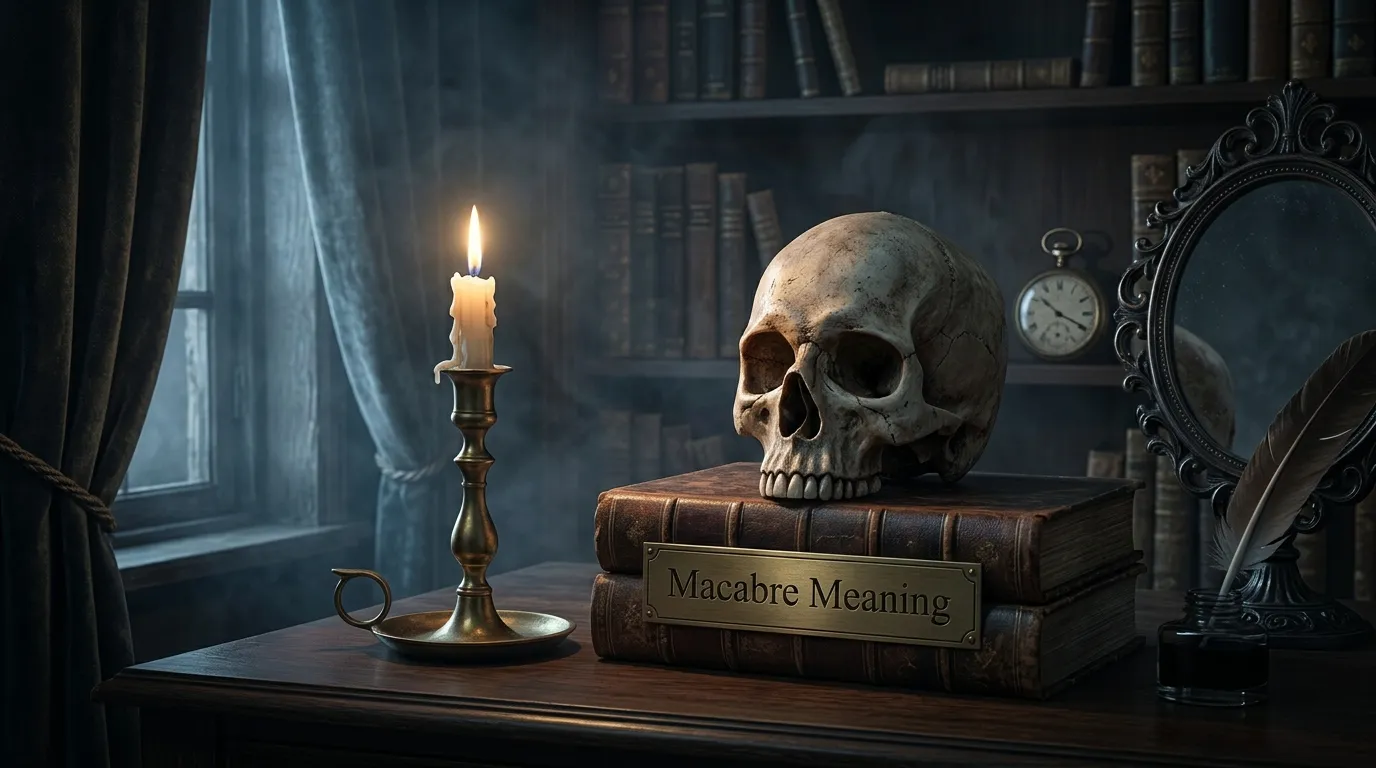
You might see the word macabre in a book, movie review, or news story and wonder what it means.
Macabre means something that deals with death, horror, or the gruesome in a dark or unsettling way. It often feels creepy, strange, or oddly fascinating at the same time.
In this guide you’ll learn the simple meaning, how people use the word, common examples, and easy ways to spot it.
Everything stays clear and straightforward so you can understand it right away.
What Does Macabre Mean?
Macabre describes things that focus on death, decay, or violence in a way that feels dark or disturbing. It can also cover humor that jokes about serious, grim topics.
The word points to a mood more than a single object. A story, picture, or joke can feel macabre when it makes you think about the scary or sad side of life without soft edges.
Most people use it for art, writing, or comments that mix the grim with the interesting. It is not the same as pure horror that just tries to scare you. Macabre often carries a strange calm or even a dry joke about something terrible.
Where the Word Comes From
The word macabre comes from older French. It links back to the idea of the Dance of Death, a medieval picture of skeletons dancing with living people. That image showed how death comes for everyone.
Over time English speakers started using macabre for anything that carries that same dark feeling. You do not need the history to use the word, but knowing it helps explain why it feels a bit formal or literary.
Common Ways People Use Macabre
People often say something is macabre when it:
- Shows death or injury in a cold or detailed way
- Mixes humor with grim topics
- Feels fascinated by the dark side of life
- Creates an uneasy or creepy mood without pure shock
You hear it in reviews of books, movies, paintings, or even real events. A news story about a strange crime might get called macabre. A comedy that jokes about funerals can feel macabre too.
The word stays useful because it names a specific tone. Not every scary thing is macabre. Not every sad thing is either. It sits in the middledark, detailed, and a little distant.
Macabre Examples in Everyday Life
Here are clear examples that show the meaning in action:
- A painting of a skeleton sitting at a dinner table looks macabre.
- A short story that calmly describes a funeral with dark jokes feels macabre.
- A Halloween display with fake body parts and clever signs can turn macabre.
- A comedy special that laughs about hospitals and accidents often has a macabre edge.
- Some old fairy tales that talk about death in matter-of-fact ways count as macabre.
Notice how none of these just yell scary. They present the grim side with a certain style. That style is the heart of the word.
Macabre vs. Similar Words
People sometimes mix macabre with other dark words. Here is a simple side-by-side look:
| Word | Main Feeling | Example |
| Macabre | Dark, death-focused, uneasy | A story about a cheerful undertaker |
| Gruesome | Bloody, disgusting details | A description of a car crash wound |
| Gothic | Moody, mysterious, old-style | A novel set in a rainy castle |
| Morbid | Unhealthy interest in death | Someone who always talks about graves |
| Creepy | Unsettling or weird | A doll that seems to watch you |
Macabre sits closest to morbid and gruesome, but it often feels more artistic or controlled. Gruesome focuses on the messy details. Morbid focuses on the unhealthy curiosity. Macabre can include both while keeping a cooler tone.
Why Writers and Artists Love the Word
Writers reach for macabre because it packs a lot into one word. It tells the reader the piece will look at hard subjects without pure panic or pure sadness.
Artists use the same idea. A sculptor might make a calm figure of a skull and flowers. A filmmaker might show a quiet scene of someone preparing a body. Both can feel macabre.
The word also helps reviewers. Instead of saying this book is dark and talks a lot about death, they can simply say it has a macabre style. Readers know what to expect.
How to Spot Macabre Tone Yourself
Ask yourself a few quick questions when you read or watch something:
- Does it focus on death, injury, or decay?
- Does it stay calm or even slightly amused about it?
- Does the mood feel strange rather than pure fear?
If the answers lean yes, the work probably has a macabre quality. You can use the same test when you write or speak. Choosing macabre instead of scary or sad makes your description more exact.
Quick Tips for Using the Word Correctly
- Use it for tone, not just any dark subject.
- Pair it with art, stories, humor, or real events that feel stylized.
- Avoid forcing it onto pure action horror or simple sadness.
- Keep the sentence simple: The play has a macabre sense of humor.
These habits keep the word sharp and clear.
Macabre in Different Areas
In books and stories
Many classic tales carry a macabre mood. They describe death or strange events with cool detail and sometimes dark jokes. Modern writers still use the same approach when they want that uneasy mix.
In movies and shows
Some films lean into quiet, unsettling scenes about loss or violence. Others mix jokes with grim situations. Both can earn the label macabre when the tone stays controlled.
In everyday talk
People call a strange news story or a dark joke macabre. It works in casual conversation once you know the meaning.
In art and design
Paintings, sculptures, and even home decorations can feel macabre when they feature bones, shadows, or death symbols with style.
You will see the word most often in these places because they care about mood.
Quick-Reference Table
| Aspect | Simple Explanation |
| Core meaning | Dark focus on death or the gruesome |
| Common feeling | Uneasy, fascinating, sometimes dry humor |
| Best used for | Art, stories, jokes, certain real events |
| Not the same as | Pure horror, pure sadness, or simple scare |
| Easy test | Calm or stylish treatment of grim subjects |
Keep this table handy when you want a fast reminder.
FAQs
Q: Macabre meaning in farsi
A: Macabre in Farsi means something dark, horrifying, or related to death.
Q: Macabre pronunciation
A: Macabre is pronounced “muh-KAHB.” Macabre (muh-KAHB)
Q: Macabre meaning French
A: In French, macabre describes something gloomy, disturbing, or associated with death.
Q: Macabre meaning arabic
A: Macabre in Arabic means something frightening, gloomy, or connected with death.
Q: Macabre meaning slang
A: In slang, macabre can describe something unusually dark, creepy, or disturbing.
Q: Macabre meaning personality
A: A macabre personality is often drawn to dark, morbid, or unsettling subjects.
Q: Macabre meaning in english
A: Macabre means disturbing or horrifying because it is connected with death or gruesome subjects.
Q: Macabre meaning in a sentence
A: Example: The movie had a macabre atmosphere filled with dark and disturbing scenes.
Humanize 134 words
Conclusion
Macabre meaning centers on a dark, death-focused mood that feels unsettling yet controlled. It shows up in stories, art, jokes, and real life whenever the grim side gets presented with style or quiet interest.
You now know the simple definition, clear examples, how it differs from similar words, and easy ways to use it yourself. Next time you meet the word, you can recognize the tone right away.
Try spotting one macabre moment in a book or show this week. Once you see it, the word becomes easy to keep and use.
Discover More Post
- Prorated Meaning: Definition, Examples & More
- Hallelujah Meaning: A Simple Guide to Its Meaning
- Mi Amor Meaning: Discover the Romantic Meaning Now
- Moniker Meaning: Origin, Use & Examples

As Mark Twain once said, “The human race has only one really effective weapon, and that is laughter.” At Goffaws.com, we couldn’t agree more—especially when it comes to CrossFit puns and jokes. Fitness may be about strength and endurance, but a good laugh can be the best workout of all. From playful gym humor to clever word twists that would make Twain chuckle, we’re here to prove that comedy and conditioning are the perfect pair.