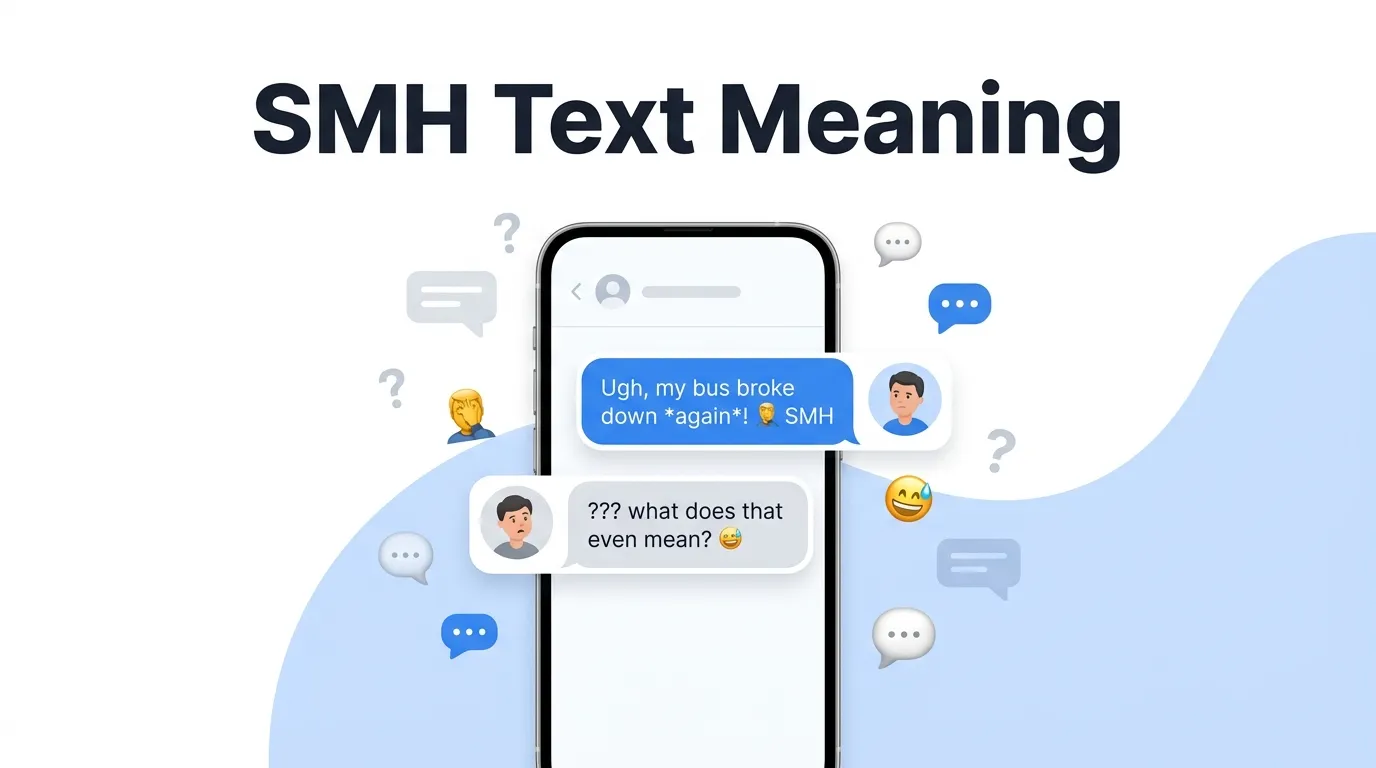
SMH text means shaking my head. People type it in messages and social media to show disappointment, disbelief, frustration, or mild disapproval without writing a full sentence.
It acts like a digital headshake when something feels silly, annoying, or hard to believe.
If you’ve ever stared at a message ending in smh and wondered what the other person really meant, you’re not alone.
This short guide walks you through the exact meaning, how people use it today, clear examples, common mistakes, and simple tips so you can read and reply with confidence.
You’re texting friends, scrolling comments, or just trying to keep up with everyday slang, you’ll know exactly what’s going on.
What SMH Stands For in Texting
SMH is an abbreviation for shaking my head. It copies the real-life gesture people make when they disagree, feel let down, or can’t quite believe what they just heard or saw.
In texting, it works as a quick emotional shortcut. Instead of typing I can’t believe you did that or That’s so frustrating, someone simply writes SMH (or smh). The tone can range from light teasing among friends to stronger disapproval, depending on the rest of the message and any emojis that come with it.
Merriam-Webster and major dictionaries list it as an expression of disapproval or disbelief. It first showed up in online chats and newsgroups in the early 1990s and became widespread through texting and social media in the 2000s. Today it remains one of the most common reaction abbreviations across platforms.
How People Actually Use SMH Text
People drop SMH in different spots in a message:
- At the start: SMH I locked my keys in the car again.
- In the middle: They canceled the show last minute SMH and didn’t even refund us.
- At the end: You forgot your own birthday? smh.
- Alone as a reaction: Someone shares a photo of a ridiculous situation and you reply smh.
It often pairs with emojis for extra clarity. A facepalm emoji or eye-roll makes the feeling stronger. A laughing emoji softens it into playful teasing. Without any extra words or emojis, SMH can sometimes feel a bit blunt, so context matters.
You’ll see it everywhere casual conversation happens—iMessage, WhatsApp, Instagram comments, TikTok replies, X (Twitter), Snapchat, and group chats. It works the same way on every platform.
Real SMH Text Examples You’ll Recognize
Here are everyday situations where SMH shows up naturally:
- Friend: I put the milk in the pantry instead of the fridge. You: smh how does that even happen
- Sibling: Forgot to charge my phone and now it’s dead right before the concert. You: SMH again?
- Group chat about traffic: Someone just cut me off and then braked for no reason. smh
- Social media comment under a news post: They raised the prices again with zero warning smh
- Self-deprecating: Spent twenty minutes looking for my glasses… they were on my head the whole time smh
These examples show the range. Sometimes it’s gentle ribbing. Other times it signals real annoyance. The surrounding words and relationship between the people talking decide the exact flavor.
SMH Variations and Similar Slang
A few related forms appear often:
- SMDH – shaking my damn head (stronger frustration)
- SMFH – shaking my f***ing head (even more intense, usually private chats only)
- Sometimes people jokingly say scratching my head, but that usually points to confusion rather than disapproval
Other rare or context-specific meanings (so much hate, send me help) exist but almost never apply in normal texting. When someone writes SMH in a message, shaking my head is the meaning you should assume.
Here’s a quick comparison of SMH with other common reaction slang:
| Slang | Full Meaning | Typical Feeling | Best Used For |
| SMH | Shaking my head | Disappointment, disbelief | Mild-to-moderate frustration |
| FML | F*** my life | Strong self-pity or bad luck | Personal disasters |
| Facepalm / 🤦 | Physical facepalm gesture | Embarrassment or secondhand cringe | Cringeworthy moments |
| LOL | Laughing out loud | Amusement | Funny situations |
| OMG | Oh my god | Surprise (positive or negative) | Shock or excitement |
This table helps you pick the right reaction so your message lands the way you intend.
When to Use SMH (and When to Skip It)
SMH works best in casual conversations with people who already use internet slang. It keeps chats fast and expressive.
Skip it in these cases:
- Professional emails or messages to a boss, teacher, or client
- Serious topics involving real hardship or tragedy (it can sound dismissive)
- When the other person rarely uses abbreviations and might feel confused
A simple rule: if you would physically shake your head while talking to the person face-to-face, SMH is probably fine in text.
Common Mistakes People Make with SMH Text
Even a short abbreviation can go wrong. Watch out for these:
- Overusing it so every reply feels judgmental
- Using it without context, leaving the other person guessing at the tone
- Assuming everyone knows it (older relatives or new English speakers may need the full phrase)
- Mixing it with stronger versions like SMFH in mixed company
Here’s a practical checklist you can keep handy:
| Step | Action | Why It Helps |
| 1 | Read the full message first | Context decides the real tone |
| 2 | Match the energy of the conversation | Avoid sounding harsher than intended |
| 3 | Add an emoji if the feeling could be unclear | Softens or clarifies the reaction |
| 4 | Follow up with a short sentence if needed | Prevents misreads |
| 5 | Save stronger versions for close friends | Keeps things appropriate |
Following these steps makes your SMH land clearly and kindly.
Why SMH Still Feels Fresh in 2026
Slang comes and goes, yet SMH has stayed useful for more than twenty years. It fills a real need: text can’t show facial expressions or body language, so people invented short ways to send those signals. SMH is efficient, widely understood, and flexible enough to fit both light jokes and genuine frustration.
As long as people keep texting about everyday annoyances and surprising moments, this three-letter reaction will keep showing up.
FAQs
Q: What does SMH mean in English text?
A: SMH means “Shaking My Head” and shows disappointment frustration or disbelief.
Q: What is SMH in WhatsApp chat?
A: In WhatsApp chat SMH means “Shaking My Head” to react to something silly or disappointing.
Q: What does SMH mean in a text from a girl?
A: When a girl uses SMH it usually means she is annoyed disappointed or cannot believe something.
Q: What does SMH mean dirty?
A: SMH does not have a dirty meaning and normally stands for “Shaking My Head.”
Q: How do you reply to SMH?
A: You can reply by explaining yourself apologizing or asking why the other person feels that way.
Q: What is the meaning of SMH on TikTok?
A: On TikTok SMH means “Shaking My Head” to react to funny awkward or unbelievable videos.
Q: What does SMH mean according to Urban Dictionary?
A: Urban Dictionary defines SMH as “Shaking My Head” to express disbelief annoyance or disappointment.
Q: What does SMH mean on social media?
A: On social media SMH means “Shaking My Head” and expresses frustration disbelief or disapproval.
Conclusion
SMH text simply means shaking my head. It lets you share disappointment, disbelief, or mild frustration in the quickest way possible. Now you know the exact meaning, how people use it, clear examples, and the best times to reach for it (or leave it alone).
Next time you see smh in a chat, you’ll understand the feeling behind it. And the next time something ridiculous happens, you’ll know exactly how to reply. Try it in a casual conversation today and notice how naturally it fits.
Discover More Post
- What Does KK Mean in Texting Learn the Real Meaning Fast
- What Does TF Meaning in Text Really Mean
- What Does Ly Mean Full Meaning and Examples
- What Is HMU Full Meaning and How to Use It

As Mark Twain once said, “The human race has only one really effective weapon, and that is laughter.” At Goffaws.com, we couldn’t agree more—especially when it comes to CrossFit puns and jokes. Fitness may be about strength and endurance, but a good laugh can be the best workout of all. From playful gym humor to clever word twists that would make Twain chuckle, we’re here to prove that comedy and conditioning are the perfect pair.