Have you ever heard someone make a quick clicking sound with their tongue and wondered what it meant?
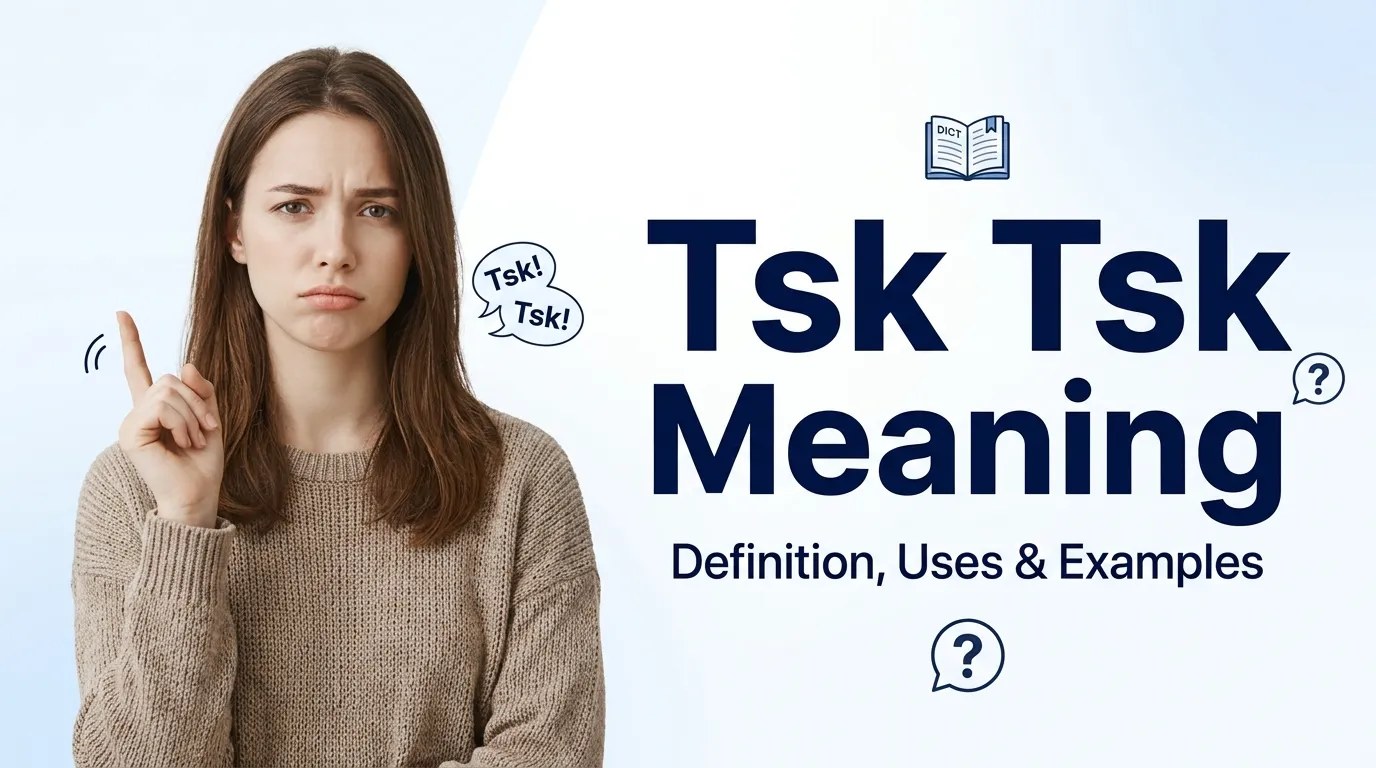
That’s tsk tsk, a simple way people show mild disapproval or disappointment.
In everyday talk, tsk tsk meaning often comes up when someone wants to understand this short, expressive phrase that packs a lot of feeling into two little sounds.
It’s a parent reacting to spilled milk or a friend teasing you about forgetting your keys again, tsk tsk is everywhere.
This article explains everything about it from its basic meaning to how people use it today, with plenty of real-life examples to make it clear and helpful.
Quick Answer
Tsk tsk is an interjection that expresses mild disapproval, disappointment, or sympathy. It imitates the sound of clicking your tongue against the roof of your mouth. People say it to gently scold or show they think something is not ideal, like Tsk tsk, you should know better. It’s informal, often playful, and works in both spoken and written English.
Meaning or Definition
At its heart, the tsk tsk meaning is all about that distinctive tongue-click sound. It is onomatopoeic a word that sounds like what it describes. You make it by placing the tip of your tongue behind your upper teeth and pulling it away quickly, creating a soft tsk or tut noise. Repeating it as tsk tsk makes the disapproval stronger but still light.
Dictionaries describe it as a way to say for shame or that’s not good without using full words. It can show:
- Gentle criticism
- Playful scolding
- Sympathy mixed with disappointment
- Mock surprise
For example, if your coworker arrives late to a meeting, you might say Tsk tsk with a smile. It’s rarely harsh. Most times it feels more like a friendly nudge than a serious judgment.
This expression fits perfectly into casual conversations. You won’t usually hear it in formal business meetings or legal settings. It belongs to everyday life at home, with friends, or while scrolling social media.
Tsk tsk
Tsk tsk is a short expression people use when they want to show disapproval, disappointment, or mild criticism. It represents the sound of clicking the tongue and is often used when someone has done something they should not have done. For example, if your friend forgets an important promise, you might say, “Tsk tsk, you should have remembered.” However, the phrase does not always sound serious. In casual conversations, it can be playful or teasing, especially when the mistake is small. The meaning depends on the situation, the speaker’s tone, and the words around it.
Tsk full form
TSK does not have a standard full form when it is used as “tsk” in conversation or chat. It is an interjection that represents a tongue-clicking sound rather than a traditional abbreviation. People use it to express disapproval, annoyance, disappointment, or sometimes playful criticism. So, if someone asks for the “tsk full form” in texting, the most useful answer is that it does not normally expand into a longer phrase. TSK can mean different things in specialized fields, but that is separate from the everyday expression. In casual English, tsk is best understood as a sound-based reaction.
Tsk tsk meaning
The meaning of “tsk tsk” is usually a gentle expression of disapproval or disappointment. It can be similar to saying, “Oh, come on,” “That was not a good choice,” or “You should know better.” The repeated sound often makes the reaction more noticeable, but it does not necessarily make it angry. In everyday conversation, someone may use “tsk tsk” seriously after hearing about bad behavior, or use it jokingly when a friend makes a silly mistake. The surrounding conversation is important because the same expression can sound critical in one situation and playful in another.
Tsk tsk tsk meaning
“Tsk tsk tsk” is a repeated version of “tsk” that adds emphasis to the reaction. It can communicate stronger disappointment, disbelief, impatience, or playful disapproval. For example, if someone keeps making the same silly mistake, a friend might respond, “Tsk tsk tsk!” to jokingly show that they are not impressed. It can also be used in a more serious way when someone strongly disagrees with an action. In texting, the repeated sound often creates a dramatic or humorous effect. It is not a completely different expression from “tsk tsk”; the extra repetition mainly adds emphasis and personality.
Tsk
Tsk is an informal interjection that represents a clicking sound made with the tongue. People use it to show that they disapprove of something, feel disappointed, or are mildly annoyed. For example, “Tsk, you forgot again” can express gentle criticism without sounding like a serious argument. The expression can also appear by itself, especially in writing, where it helps communicate a reaction that would normally be heard through tone of voice. In casual chat, “tsk” may be serious, sarcastic, or playful depending on the conversation. It is commonly repeated as “tsk tsk” when someone wants to make the reaction more noticeable.
What is tsk tsk mean
If you are asking “What does tsk tsk mean?”, it generally means that someone is showing disapproval, disappointment, or mild criticism. Imagine someone shaking their head and making a small clicking sound because they do not approve of what happened. That is the feeling behind “tsk tsk.” For example, if your friend eats the last slice of pizza after promising to save it, you could jokingly say, “Tsk tsk!” In chat, the expression may be much lighter than it sounds. It can simply be a playful way to say that someone made a questionable or silly choice.
Tsktsk
Tsktsk is an informal spelling of “tsk tsk.” The two parts are written together, but the basic meaning stays the same. People may use this form in casual writing, texting, comments, or online conversations to show disapproval, disappointment, or playful judgment. For example, “Tsktsk, you really forgot again?” can be a teasing response between friends. It is not normally a separate slang word with a completely different definition. The spelling simply changes the way the expression looks on the page. If you see “tsktsk” online, reading it as “tsk tsk” will usually give you the intended meaning.
Tisk tisk meaning
“Tisk tisk” is an informal spelling that represents the same expression as “tsk tsk.” It is used to show disapproval, disappointment, or playful criticism. People sometimes spell it as “tisk tisk” because that version looks closer to how the expression sounds when spoken aloud. For example, someone might say, “Tisk tisk, you should have listened,” after a friend ignores good advice. In casual conversations, it can be humorous rather than harsh. The phrase is often used to tease someone over a small mistake instead of seriously scolding them. The surrounding words, emojis, and situation can help show whether the speaker is being serious or playful.
Tsk tsk meaning in chat
In chat, “tsk tsk” is usually a quick way to express mild disapproval, disappointment, or playful teasing. Someone may send it after a friend makes a silly mistake, admits to breaking a small rule, or says something questionable. For example, “Tsk tsk 😂” can sound more playful than a plain “tsk tsk” because the emoji changes the mood. It can also be used without any extra words when the sender wants the expression itself to communicate the reaction. Unlike a strong insult or angry statement, “tsk tsk” is often relatively mild. Its exact tone depends on the conversation and the relationship between the people chatting.
Tsk meaning
Tsk means a sound or written expression used to show disapproval, disappointment, annoyance, or impatience. It represents a tongue-clicking sound that people can make when they are unhappy with something. In writing, it allows the reader to imagine that reaction without hearing the speaker. For example, “Tsk, that was careless” shows mild disapproval. The expression can also be used humorously, especially when friends are teasing each other about a small mistake. It is commonly written as tsk, tsk tsk, or tsk-tsk. Although its basic meaning involves disapproval, the actual feeling can range from serious criticism to lighthearted teasing.
What Does TSK Mean?
If you are searching what does TSK mean or TSK meaning, it is a sound or expression used to show disappointment, annoyance, disapproval, or a small complaint. People often use TSK in online chats the same way they might make a clicking sound in real life. It can express feelings like “that is not good” or “I disagree.” The meaning depends on the conversation tone and the situation where it is used.
TSK TSK Meaning
The TSK TSK meaning is usually a repeated expression used to show mild criticism, disappointment, or disapproval. When someone writes TSK TSK in a message, they may be reacting to something they think is wrong, silly, or surprising. It is similar to saying “shame” or “that’s not good” in a playful way. This phrase is common in casual conversations, social media comments, and online discussions where people want to show a reaction without using a full sentence.
TSK TSK Meaning in Chat
The TSK TSK meaning in chat is the same as the spoken expression. People use it in texting to show a reaction such as disappointment, disbelief, or playful judgment. For example, someone might type TSK TSK when a friend makes a funny mistake or shares something questionable. Unlike regular words, TSK depends heavily on the tone of the conversation, so it can be serious, teasing, or humorous depending on how it is used.
TSK Significado
The phrase TSK significado means the meaning of TSK in Spanish searches. TSK is generally understood as an expression of disapproval, annoyance, or disappointment rather than a traditional word. It represents a sound people make when reacting to something they do not like or approve of. In online conversations, the meaning remains similar across languages because it is based on a common human reaction sound rather than a specific vocabulary term.
Grammar or Correct Usage
Using tsk tsk correctly is straightforward because it’s flexible. You can use it as:
- An interjection by itself: Tsk tsk!
- Part of a sentence: Tsk tsk, that’s not very nice.
- A verb: She tsk-tsked at the messy room.
Spelling matters a bit. Many sources prefer tsk tsk for the sound itself. Some writers use tisk tisk when talking about the noise, but tsk tsk is more common in modern writing.
You can repeat it more than twice for emphasis: Tsk tsk tsk, how many times do I have to tell you? Commas often separate the words for clarity in writing.
It works well with body language. A raised eyebrow, a slight head shake, or a wagging finger makes the meaning clearer. In text messages, people sometimes add emojis like 😏 or 🙄 to show the tone.
Here’s a simple table showing different ways to use it:
| Situation | Example Phrase | Tone Conveyed |
| Child spills juice | Tsk tsk, be more careful! | Gentle reminder |
| Friend forgets birthday | Tsk tsk, I can’t believe you! | Playful teasing |
| Bad movie review | Tsk tsk, what a waste of time | Mild disappointment |
| Sympathy for small mistake | Tsk tsk, that’s too bad | Support with light critique |
This table shows how context changes the feeling behind the same short phrase.
Origin or History
The tsk tsk meaning has roots that go back further than many people realize. The sound itself is a dental click, a type of consonant used in some African languages as part of regular speech. In English, though, it serves a special purpose outside of normal words.
Similar expressions like tut tut appeared in English as early as the 1500s. Both tut tut and tsk tsk represent the same tongue-click sound but use different spellings. Over time, tsk tsk became popular because it visually matches the sharp tsk noise better.
By the 1930s, tsk started appearing regularly in American English writing. Dictionaries note its first known uses around 1935-1940 as an expressive sound. It grew more common in the mid-20th century through books, comics, and everyday speech.
The verb form to tsk-tsk someone came later, around the 1960s. This shows how the expression evolved from a pure sound into something you can do as an action.
Interestingly, this click sound appears in many cultures. In some places it signals agreement or calls animals. But in English-speaking countries, it almost always means disapproval or mild shame.
British vs American English
Tsk tsk works similarly on both sides of the Atlantic, but small differences exist. British English often prefers tut tut or just tut. You might hear a British grandmother say Tut tut, that’s no way to behave!
American English leans toward tsk tsk, especially in writing and younger generations. Both versions are understood everywhere, though. The meaning stays exactly the same.
In texting and online chat, Americans and Brits mix them freely. The rise of social media has made tsk tsk more universal because spelling it out feels natural in quick messages.
Common Mistakes
People sometimes get confused about when and how to use this phrase. One big mistake is using it when strong anger is needed. Tsk tsk feels too light for serious situations. Saying it about something truly upsetting can make you seem dismissive.
Another error is overusing it. If you tsk tsk at everything, it loses its effect and starts sounding annoying.
Spelling mix-ups happen too. Writing tisk tisk is acceptable in some contexts, but tsk tsk is more standard for the sound. Avoid turning it into a full word like tsking unless you’re describing the action.
Some people also mistake it for sarcasm only. While it can be sarcastic, it often carries genuine (if mild) concern or sympathy.
Here is another helpful table about common mistakes:
| Mistake | Wrong Example | Better Approach |
| Too harsh context | Tsk tsk at a serious accident | Use stronger words instead |
| Over-repeating in one talk | Tsk tsk every sentence | Save it for special moments |
| Wrong spelling in formal text | Tsktsk without spaces | Tsk tsk, or describe the action |
| Missing tone in text | Just tsk tsk alone | Add emojis or more context |
Understanding these pitfalls helps you use the phrase more effectively.
Real-Life Examples
Let’s look at how tsk tsk appears in daily life to better understand the tsk tsk meaning.
Imagine a family dinner. Little Timmy drops his fork for the third time. Dad sighs and says, Tsk tsk, Timmy. Hold it properly. The words are light, and everyone smiles. It teaches without yelling.
At the office, Sarah notices her colleague wearing mismatched socks. Tsk tsk, fashion emergency! she jokes. It breaks the ice and creates a friendly moment.
On social media, you might see comments like Tsk tsk, another celebrity scandal 😔. Here it shows disappointment in a public figure without being too mean.
Parents use it a lot with kids. Tsk tsk, did you really eat all the cookies before dinner? It lets children know they made a small mistake while keeping the mood warm.
Even in sports, fans might tsk tsk when their team misses an easy shot. It expresses shared frustration in a relatable way.
These examples show how versatile the phrase is. It fits family life, work, friendships, and online interactions.
Current Usage or Trends
Today, tsk tsk remains popular in spoken English and digital communication. With the growth of memes and short videos, the sound effect appears often in comedy sketches and reaction videos. People recognize it instantly as a sign of mock judgment.
Younger generations sometimes type it as ts ts or add it to TikTok captions. It feels retro yet fresh at the same time old-fashioned enough to be charming but common enough to feel natural.
In professional settings like customer service, you might hear it softened: Tsk tsk, sorry about that mix-up. It shows empathy without sounding cold.
The phrase also pops up in books, TV shows, and movies when characters want to convey disapproval quickly. Its simplicity makes it perfect for fast-paced dialogue.
Trends show that expressive sounds like this are gaining ground in text because they add personality. Emojis help, but nothing quite replaces the classic tsk tsk.
Tips or Best Practices
Here are some practical tips for using tsk tsk effectively:
- Match your tone to the situation. A smile softens it into teasing. A serious face makes it more corrective.
- Combine it with words for clearer meaning. Tsk tsk, that’s disappointing works better than the sound alone in writing.
- Use it sparingly. Like any expressive tool, it shines when used at the right moment.
- Consider your audience. It works great with friends and family but might seem unprofessional with bosses or clients.
- Practice the actual sound. Getting the tongue click right makes it more authentic and fun.
- In writing, add context. Readers can’t hear the click, so help them feel the intended emotion.
Following these tips turns a simple phrase into a useful communication tool that builds connection instead of distance.
FAQs
Q: What does tsk tsk mean in text?
A: Tsk tsk in text shows gentle disapproval disappointment or mild criticism.
Q: What is the meaning of tsk tsk in Urdu?
A: Tsk tsk in Urdu means اظہارِ افسوس یا ہلکی سی ناراضی.
Q: What does tsk tsk mean in chat?
A: Tsk tsk in chat is used to express disappointment or playful disapproval.
Q: What is the full form of TSK?
A: TSK has no full form because it is a sound used to show disapproval.
Q: What does TSK mean in WhatsApp?
A: TSK on WhatsApp usually expresses disappointment annoyance or gentle criticism.
Q: What does tsk tsk mean in English?
A: Tsk tsk is an expression used to show mild disapproval or disappointment.
Q: How do you pronounce tsk tsk?
A: It is pronounced like a quick clicking sound made with the tongue.
Q: What does TSK mean in chat from a girl?
A: TSK from a girl often means she is teasing showing disappointment or playfully expressing disapproval.
Conclusion
Understanding the tsk tsk meaning opens up a fun, expressive part of everyday English. This short sound carries centuries of human emotion in a quick click. It lets us share gentle disapproval, offer sympathy, or add humor to conversations without harsh words.
You’re a parent guiding your kids, a friend sharing laughs, or someone navigating online chats, tsk tsk adds color and personality. Remember to use it kindly and in the right moments. It works best as a light touch rather than a heavy hammer.
Next time you hear or feel like saying tsk tsk, you’ll know exactly why and how to make it land well. Language is full of these little gems that make communication richer. Mastering small expressions like this helps you connect better with people around you.
Go ahead and try it out in your daily life. A well-timed tsk tsk might just brighten someone’s day or gently steer them in the right direction.
Discover More Post
- What Does Ima Mean in Text? Full Guide
- What Does YWA Mean? The Complete Texting Guide
- What Does IKTR Mean in Text? Real Meaning & Examples
- SMH Text Meaning: What It Really Means in Chats

At Goffaws.com, we celebrate words that move, inspire, and connect us—and few voices have done that better than Maya Angelou. A poet, author, and civil rights icon, Angelou used her powerful storytelling to speak truth, courage, and compassion into the world. Her timeless wisdom reminds us that even in struggle, there is beauty; even in silence, there is power. Join us as we explore the life, legacy, and lessons of one of history’s most inspiring voices.