Scrolling through Snapchat or TikTok and someone drops WYLL in your DMs? You’re not alone in wondering what it means.
This four-letter abbreviation has become one of the most searched texting terms among teens and young adults, and if you’ve never come across it before, it can look like total gibberish.
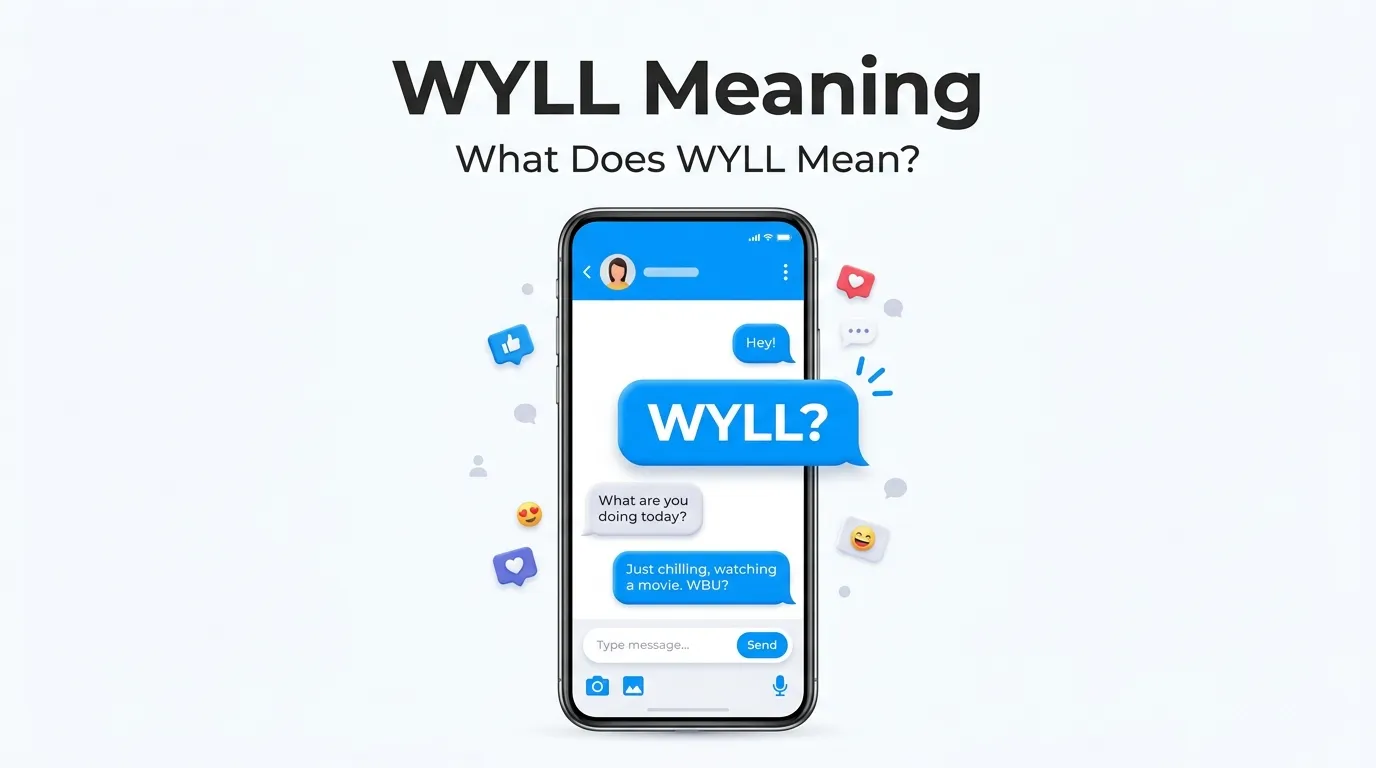
So, what does WYLL stand for? In short, it’s internet slang for What You Look Like?
A casual, quick way of asking someone to describe themselves or, more often, send a photo. You’ll spot it most on Snapchat, Instagram DMs, and TikTok comments, usually between people who haven’t met face-to-face.
In this guide, we’ll break down exactly what WYLL means, where the term came from, how people use it across different platforms, and just as importantly how to respond to it safely if someone sends it your way.
Wyll meaning
WYLL is texting slang for What You Look Like? People use it when they want to know what someone looks like, usually by asking for a selfie, recent photo, or simple description. It is especially common in casual online conversations and social media chats. For example, if someone has been chatting with you but has never seen your face, they might simply send wyll? This does not automatically mean the person is flirting. It can show simple curiosity, friendly interest, or attraction depending on the conversation. If you are not comfortable sharing a photo, you can always say so.
Wyll ne demek
WYLL, Türkçe olarak en basit şekilde Nasıl görünüyorsun? veya Ne gibi görünüyorsun? anlamında kullanılan bir internet kısaltmasıdır. Genellikle biriyle mesajlaşırken onun görünüşünü merak ettiğinizde yazılır. Çoğu durumda kişi sizden bir selfie veya güncel fotoğraf göndermenizi bekler. Örneğin, biri size wyll? yazarsa, aslında Seni görebilir miyim? veya Nasıl görünüyorsun? demek istiyor olabilir. Bu ifade özellikle sosyal medya ve özel mesajlarda kullanılır. Anlamı genellikle aynıdır, ancak konuşmanın tonuna göre samimi, meraklı veya biraz flörtöz olabilir.
Wyl meaning
WYL is different from WYLL because it is missing one L. In many searches and chats, wyl may simply be a shortened or mistyped version of WYLL, which means What You Look Like? If someone sends you wyl? while talking about photos, appearance, outfits, or meeting in person, they are probably asking what you look like. However, unlike WYLL, WYL does not have one universally fixed texting meaning, so context matters. If the conversation is about appearance, reading it as WYLL is usually the most natural interpretation. The exact meaning can change if WYL appears in a different subject or community.
What is wyll
WYLL is an informal internet abbreviation that means What You Look Like? It is used when someone wants to know another person’s appearance, often by asking for a picture. You may see it in messages such as Hey, we’ve been talking for a while, WYLL? In that situation, the sender is basically asking to see what you look like. The term is casual rather than formal English, so it is mainly suited to texting, DMs, and social media conversations. Depending on who sends it and when, WYLL can sound friendly, curious, direct, or slightly flirty.
Wyll full form
The commonly used full form of WYLL is What You Look Like. It is a shortened texting expression used to ask about someone’s appearance. The letters come from W = What, Y = You, L = Look, and L = Like. In everyday messaging, people normally do not write the complete phrase because WYLL is faster and fits the short style of social media chats. A person who sends WYLL? will often be asking for a selfie or current picture rather than expecting a long description. It is informal slang, so it is more natural in casual messages than in formal writing.
What does wyll mean
When someone asks What does WYLL mean?, the simple answer is What You Look Like? It is a casual abbreviation used when someone wants to know another person’s appearance. For example, a person you meet online may chat with you for a while and then ask, WYLL? They are usually asking you to send a photo or selfie so they can see you. The expression can be completely friendly, but it may also have a flirty tone when used between people who are interested in each other. The timing and conversation usually give the best clue about the sender’s intention.
Wyll btw meaning in chat
WYLL BTW in chat usually combines two texting expressions. WYLL means What You Look Like?, while BTW means By The Way. Together, a message such as BTW, WYLL? means something like By the way, what do you look like? The sender is probably asking about your appearance and may want to see a photo. Adding BTW makes the question sound more casual, as if the person is bringing it up naturally during the conversation. It can be friendly or slightly flirty, depending on the relationship. The phrase is informal and is mainly used in texting, DMs, and social media chats.
Wyll meaning in Urdu
WYLL کا مطلب texting یا social media chat میں عام طور پر What You Look Like? ہوتا ہے، یعنی آپ کیسے نظر آتے ہیں؟ یا آپ کی شکل و صورت کیسی ہے؟۔ جب کوئی شخص آپ کو WYLL? لکھتا ہے تو وہ عموماً آپ کی تصویر، selfie، یا آپ کی شکل کے بارے میں جاننا چاہتا ہے۔ مثال کے طور پر، اگر دو لوگ online بات کر رہے ہوں اور ایک دوسرے کو ابھی تک نہ دیکھا ہو، تو ایک شخص پوچھ سکتا ہے، WYLL? یہ سوال صرف curiosity کے لیے بھی ہو سکتا ہے اور کبھی friendly یا flirty انداز میں بھی استعمال ہوتا ہے۔
What Does WYLL Mean in Text and Chat?
WYLL stands for What You Look Like. People commonly use it in text messages and social media chats when they want to know another person’s appearance. It often appears on Snapchat Instagram TikTok Discord and dating apps. Someone may send WYLL? after chatting for a while to ask for a selfie or a simple description. The meaning depends on the conversation but it is usually a friendly question. Always share photos only if you feel comfortable and trust the other person.
WYLL Full Form and What It Stands For
The full form of WYLL is What You Look Like. It is an internet abbreviation used to save time while texting. Instead of typing the complete question users simply write WYLL. This slang is popular among teenagers and young adults because it makes online conversations faster. If someone asks WYLL they are interested in knowing your appearance. You can answer with a photo a short description or politely decline if you prefer privacy.
WYLL Meaning in Chat Texting and Social Media
In chat and texting WYLL has the same meaning which is What You Look Like. It is widely used across messaging platforms where people meet new friends or start conversations. Users often ask WYLL before exchanging pictures or video calls. The abbreviation is casual and should only be used in informal conversations. If you receive this message you can respond in any way that feels safe and comfortable without feeling pressured to share personal information.
What Does WYLL Mean in a Text Message?
When someone sends WYLL in a text message they are asking what you look like. They may want to see your face learn about your style or confirm who they are talking to. This question is common in online friendships gaming communities and dating apps. Before sending a photo always make sure you trust the person. If you are uncomfortable simply reply with a friendly message instead of sharing personal pictures.
What Is WYLL and How Is It Used?
WYLL is a modern texting abbreviation that helps people ask about someone’s appearance in a short and simple way. It is mostly used in casual online conversations rather than professional communication. You may see WYLL in direct messages group chats or social media comments. Because it relates to personal identity users should always think about privacy before responding. Understanding this slang helps you communicate more confidently in today’s digital conversations.
WYLL Meaning in Different Languages
If you search WYLL ne demek or What is WYLL the meaning is still What You Look Like. The abbreviation stays the same across different languages because it comes from English internet slang. People around the world use it while chatting on global social media platforms. Even if English is not your first language understanding WYLL can help you recognize common online expressions and reply appropriately in international conversations.
The Meaning
WYLL stands for What You Look Like? an informal, shortened way of typing out What do you look like? It’s one of those texting abbreviations that trades grammar for speed, which is pretty typical of how Gen Z communicates online.
Unlike a lot of slang that’s purely conversational, WYLL almost always comes with an unspoken expectation attached: the person asking usually wants a photo, not just a written description. If someone replies with I’ve got brown hair and glasses, that technically answers the question but most people sending WYLL are hoping for a selfie instead.
You’ll see it written in a few different ways depending on who’s typing it sometimes in all caps (WYLL), sometimes lowercase (wyll), and occasionally shortened further to just WYL. All variations mean the same thing, so context (and who’s asking) matters more than the exact spelling.
At its core, though, it’s a simple question dressed up in internet shorthand.
Where It Came From
Like most internet slang, WYLL didn’t appear overnight it evolved gradually through everyday texting before catching on at scale. The abbreviation seems to have first popped up in casual chats around 2020, when short, snappy texting shortcuts were already booming thanks to apps like Snapchat and TikTok.
By late 2022, WYLL had become common enough on Snapchat that it started getting called out and sometimes mocked on other platforms like Twitter (X) and TikTok, where users shared their frustration at being asked wyll as an opening line instead of an actual conversation starter.
From there, it spread beyond Snapchat into Instagram DMs, story replies, and even gaming platforms like Roblox, where players chatting with people they’ve never met sometimes use it to ask what someone looks like in real life.
Today, WYLL is firmly part of Gen Z’s texting vocabulary one of many compact abbreviations, like WYD or WYA, built for fast, low-effort digital conversation.
How It’s Typically Used
WYLL shows up most often in a few specific situations. The most common is between people who’ve been chatting online but haven’t met in person maybe they matched through mutual friends, a group chat, or a shared interest page, and one person is curious enough to ask before things go further.
It’s also frequently used as a caption or comment under a selfie or story, functioning almost like a compliment fishing for a reply something like WYLL? Asking for a friend 👀. Other times, it’s sent as a flirty opener in DMs, especially on Snapchat, where disappearing photos make it feel lower-stakes to share a quick pic.
Importantly, WYLL is almost always sent privately rather than in public comments, since asking what someone looks like is a fairly personal question. A typical exchange might look like: You seem cool, WYLL? Send a pic 📸 direct, casual, and to the point.
Tone and relationship context shape how it lands, whether playful or pushy.
WYLL Meaning and What Does WYLL Mean
WYLL stands for “What You Look Like?” It is a popular slang term used in text messages and social media when someone wants to know another person’s appearance. Instead of asking for a full description users simply type WYLL to keep the conversation short. The abbreviation is especially common on Snapchat TikTok Instagram and dating apps where people often exchange photos or talk with new friends. The exact meaning is usually clear from the context of the conversation.
WYLL Meaning in Text
In text messages WYLL is a quick way of asking “What do you look like?” People often send it after chatting for a while when they want to see the other person’s face or learn more about their appearance. It is mostly used in casual conversations rather than formal communication. If you receive WYLL the sender is usually asking for a selfie a picture or a simple description of your appearance before continuing the conversation.
WYLL Slang
WYLL is considered modern internet slang and has become popular among teenagers and young adults. It is frequently used on Snapchat TikTok Instagram and other messaging platforms where short abbreviations make conversations faster. Unlike many slang terms WYLL has one widely accepted meaning which is “What You Look Like?” Because it is informal it is best used with friends or people you know rather than in professional or business conversations.
What Is WYL Meaning
WYL is different from WYLL even though many people confuse the two. WYL can have several meanings depending on the conversation while WYLL almost always means “What You Look Like?” If you see WYL in a text message read the surrounding conversation carefully because its meaning may change between online communities. Always use the context to understand which abbreviation the sender actually intended.
A Word of Caution
Because WYLL is essentially a request for a photo often from someone you’ve never met face-to-face it’s worth pausing before you respond. A few things worth keeping in mind:
You never owe anyone a photo. It’s completely fine to ignore the message, reply with a description instead, or send an avatar or Bitmoji if you’d rather keep things light.
Context matters. A friend asking casually feels very different from a stranger sending it out of nowhere with no greeting.
Be cautious with anyone you can’t verify. This is especially true for teens and younger users requests like this are sometimes used by people trying to manipulate kids into sharing photos they shouldn’t.
Trust your gut. If a request feels pressuring, repetitive, or uncomfortable in any way, it’s okay to block or report rather than keep engaging.
Parents in particular should treat WYLL as a good conversation starter with their kids about who’s asking, why, and what’s okay to share online.
The Bottom Line
So, what does WYLL stand for? At its simplest, it’s just Gen Z shorthand for What do you look like? a quick, casual way to ask for a photo or description in a text, DM, or Snap. It’s not inherently rude or dangerous; most of the time, it’s exactly what it looks like: casual curiosity between people chatting online, sometimes flirty, sometimes just friendly.
That said, because it’s so often directed at people who haven’t met in person, WYLL is a good reminder of how internet slang can carry more weight than it first appears. Knowing what it means and how to respond to it comfortably puts you in control of the conversation, whether that means sending a selfie, replying with words instead, or simply not answering at all.
For parents, staying familiar with terms like WYLL is one small but useful way to keep up with how kids communicate today, and to have open, judgment-free conversations about staying safe online.
Similar Slang Terms You Should Know
WYLL isn’t the only abbreviation floating around in Gen Z texting culture it belongs to a whole family of quick, question-based shorthand. Knowing a few related terms can help you keep up with the broader conversation:
WYD What you doing? A general check-in, often used to see if someone’s free or just to start a conversation.
WYA Where you at? Usually sent when trying to meet up or figure out someone’s location.
WYF Who you following? or sometimes What’s your favorite, depending on context often used on social platforms.
HMU Hit me up, an invitation to reach out or reconnect.
WYLL vs. WYD vs. WYA while WYD and WYA are about activity and location, WYLL stands apart because it’s specifically about appearance, which is why it carries a bit more weight and warrants more caution than the others.
Recognizing these patterns makes it easier to understand the tone and intent behind a message at a glance
FAQs
Q: Wyll meaning in urdu
A: WYLL کا اردو مطلب عام طور پر “آپ کیسے نظر آتے ہیں” ہوتا ہے اور یہ کسی کی شکل یا تصویر پوچھنے کے لیے استعمال ہوتا ہے۔
Q: Wyll meaning from a girl
A: When a girl says WYLL she is usually asking what you look like or requesting a photo.
Q: Wyll meaning in english
A: WYLL stands for What You Look Like in English texting and social media.
Q: Wyll meaning from a guy
A: When a guy says WYLL he is usually asking what you look like or asking for your picture.
Q: Wyll meaning tiktok
A: On TikTok WYLL commonly means What You Look Like when chatting with someone.
Q: Wyll tho meaning in chat
A: In chat WYLL tho means What You Look Like though and is used to ask about someone’s appearance.
Q: Wyll meaning instagram
A: On Instagram WYLL usually means What You Look Like in direct messages and comments.
Q: Btw wyll meaning
A: BTW WYLL combines By The Way and What You Look Like in online conversations.
Conclusion
Internet slang moves fast, and WYLL is a perfect example of how a simple four-letter abbreviation can carry more meaning than it first appears. At its core, it’s just a casual way of asking what do you look like? but understanding the context around it, from where it’s typically used to how to respond safely, makes navigating today’s texting culture a whole lot easier.
Whether you’re a teen decoding a Snapchat message, an adult catching up on Gen Z slang, or a parent trying to stay connected to how your kids communicate, knowing what WYLL means (and what it doesn’t obligate you to do) puts you in a better position to engage confidently online.
Slang like this will keep evolving, and new abbreviations will keep popping up. But the underlying advice stays the same: understand what’s being asked, respond only in ways you’re comfortable with, and don’t hesitate to set boundaries when something feels off.
Staying informed is really the best way to keep online conversations safe, respectful, and enjoyable for everyone involved.
Discover More Post
- What’s a GIF? A Simple Guide to the Internet’s Favorite Moving Picture
- ATP Urban Dictionary Meaning: What Does ATP Really Mean in Texting?
- Wut Meaning: Why Everyone Uses It
- NB Meaning: Complete Guide for Beginners

As Mark Twain once said, “The human race has only one really effective weapon, and that is laughter.” At Goffaws.com, we couldn’t agree more—especially when it comes to CrossFit puns and jokes. Fitness may be about strength and endurance, but a good laugh can be the best workout of all. From playful gym humor to clever word twists that would make Twain chuckle, we’re here to prove that comedy and conditioning are the perfect pair.